


A communication plan that looks fine in a quiet planning meeting can fall apart quickly in a loud event environment.
High-noise environments make audio communication harder and more unpredictable. Noisy areas aren’t just located near staging or on expo floors. Crowded concourses and loading areas pose similar problems, as do guided tours or teams that move throughout a facility.
In these high-noise environments, the combination of decibel levels, mobility, timing pressure and changing surroundings make communication less reliable from one zone to the next.
"At the Consumer Electronics Show (CES) at the Las Vegas Convention Center, the challenge was not just volume. It was constant movement between dramatically different sound environments. Teams and presenters moved throughout crowded expo halls, breakout rooms, activation spaces and connecting concourses where noise levels changed from one zone to the next. A communication plan that sounded clear during pre-event testing quickly became less reliable once the event floor filled with attendees, live demonstrations and overlapping production audio. Our onsite team responded by helping presenters adapt communication practices in louder transition zones while fine-tuning headset audio settings to maintain clearer communication across the site."
The best event audio communication plans don’t just ask whether you need two-way radios, headsets or related equipment. They ask where the event gets loud, where teams are moving, where audience listening matters and where communication failure would create the biggest disruption. The environment determines which equipment is appropriate for the task at hand, not the other way around.
What Impact Does Noise Have on Communication?
In practice, noise impacts message clarity, can increase repetition and response times and lower confidence. It adds mental load. It forces people to work harder to hear and harder to decide whether they heard correctly. That extra strain is not trivial, especially when teams are moving quickly, juggling tasks or handling time-sensitive updates.
Loud environments also make even simple coordination more fragile. A message that would be easy to hear in a quiet back office can become unclear on a crowded expo floor or near a stage transition. The issue is not only volume but intelligibility under real conditions.
Consider the following typical noise levels in common event areas.
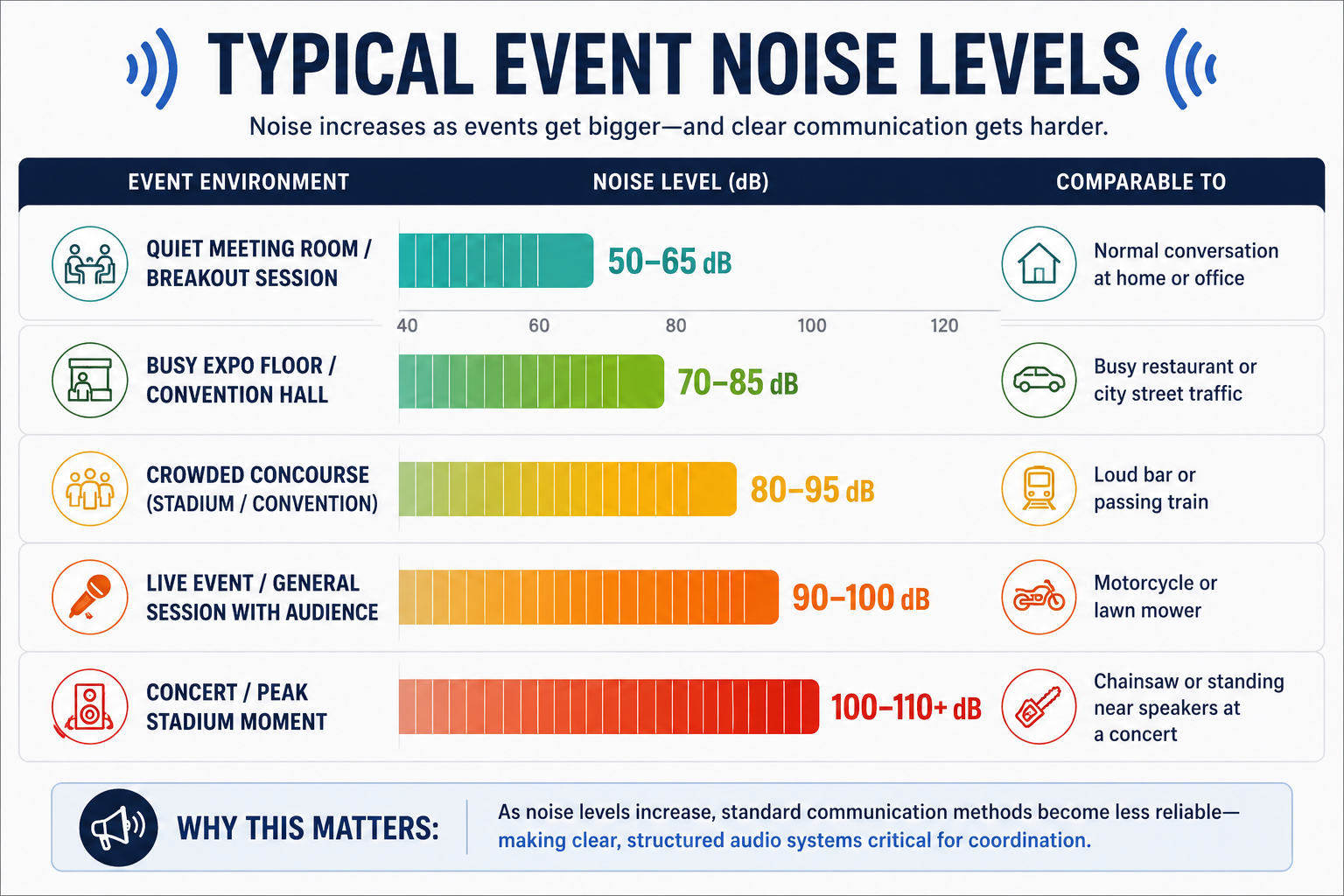
Communication breakdowns in high-noise environments tend to happen in predictable zones, at predictable moments and under predictable types of pressure. That’s why working with an experienced audio technology company is imperative. They have worked in diverse environments and can anticipate where sound quality issues might arise.
Can You Hear Me Now?
In environments above 85 dB, individuals must raise their voices to be heard, and verbal communication becomes unreliable without amplification or structured communication systems.
Source: Occupational Safety and Health Administration, Occupational Noise Exposure.
Where Do Audio Communication Plans Break Down in High-noise Environments?
The most common failure point in a communication plan is not that equipment isn’t transmitting clearly. Instead, it’s because shifts in decibel levels, locations and surrounding environments diminish clarity.
The impact of loud environments typically leads to the following issues:
- People ask for repeated messages more often
- Short updates become too vague to be useful
- Teams hesitate because they are not sure what they heard
- Critical updates get delayed while someone re-checks or re-routes the message
- Communication consistency drops as users move between quieter and louder zones
Environments where noise and mobility overlap exacerbate the issue. Someone may hear clearly in one location, then lose that clarity entirely while moving into a concourse, crossing a show floor, entering a loading area or shifting from a quiet holding room into an active public space.
Weak role structure makes this worse. If teams are already unclear about who should hear what, or who owns escalation, noise amplifies the confusion.
Story from the Field
At a large corporate event, operations and security teams relied on two-way radios to coordinate attendee movement during a major keynote transition. Communication became more difficult as teams moved from quieter backstage corridors into crowded concourses filled with attendee traffic and overlapping conversations. The challenge was not radio coverage. It was maintaining fast, intelligible communication during high-pressure moments where timing and coordination mattered most. An onsite team helped simplify communication procedures and adjusted headset accessories to improve clarity in louder crowd environments.
Should a Communication Plan Start With the Task or Equipment Selection?
The best way to plan for high-noise environments is to start with the communication task. Selecting the proper equipment hinges on your team’s needs, where they need to transmit from and expected noise levels in the area.
Event organizers and your communication equipment provider will need to get answers to the following questions:
- Who needs to talk?
- What kind of information are they sharing?
- How quickly do they need to act on it?
- Which updates are routine, and which ones are urgent?
- Where is communication mission-critical, and where is it merely helpful?
- What anticipated sound levels will be in place when the event is live?
Those questions matter because not every communication need is the same. A production cue, a safety escalation, a logistics update and a guided attendee listening experience are all different tasks. If they get treated as one equipment problem, the plan gets weaker.
This is also where it helps to keep the distinction between team coordination and listener experience clear. Radios typically support internal staff coordination. Headsets or other listening solutions may support presentation continuity, intelligibility and audience engagement in environments where open-air listening would be compromised.
Good planning gets better when the workflow is clear before the equipment is chosen.
What Are Common Loud Zones and High-risk Moments at Large Events?
Numerous communication challenges exist in loud event environments. The following areas commonly experience issues:
|
Area or Application |
Potential Communication Challenge |
|
Main stages |
Speakers and production audio can exceed acceptable decibel levels, making it difficult for teams to clearly hear messaging |
|
Exhibit floors |
Sustained ambient noise reduces intelligibility over time, leading to listener fatigue and missed information |
|
Concourses |
Congestion during peak times creates overlapping noise and distractions that interfere with communication |
|
Loading/unloading areas |
High levels of movement combined with vehicle noise disrupt consistent message delivery |
|
Cueing areas |
Short, high-pressure interactions where timing is critical leave little margin for miscommunication |
|
Crowd surges |
Sudden increases in crowd noise can overpower audio, causing key messages to be lost |
Transitions between quiet and loud spaces create different kinds of pressure. A team may perform well in a quiet area and struggle once one or more team members move to a louder space.
Not every part of an event site creates the same audio communication challenge. That is why the plan has to be tailored to the environment, not a one-size-fits-all equipment package. The more precisely planners identify loud zones and high-risk moments, the better they can design around them.
Why Build a Plan Around Clarity, Escalation and Redundancy in High-Noise Environments?
High-noise environments exacerbate communication issues related to cluttered channel assignments, vague escalation rules, or unclear ownership. Building a plan around the environment and tasks at hand, rather than the equipment, is a more strategic approach.
A simpler, defined strategy helps by:
- Identifying risk zones
- Establishing clear channel logic for team coordination
- Defining escalation paths
- Simplifying priority messaging for urgent issues
- Identifying communication paths that matter most
- Building in redundancy that support the plan, not confuse it
The goal is not more traffic. The goal is preserving clarity when conditions are working against it so that teams know which audio path is for routine coordination, which is for urgent escalation, who should monitor what and how information moves when the environment becomes difficult.
In loud environments, overcomplicated communication plans fail faster than equipment.
Equipment Matters, But Usability Matters Just As Much
For internal coordination, the question is simple: can teams hear, speak and respond clearly under pressure? For listening-driven environments, the goal is different: does the headset or listening system keep content clear without disruption, distraction or listener fatigue?
Headsets can play a critical role in high-noise environments because they help:
-
Maintain speech intelligibility
-
Keep presentations on track
-
Support engagement in acoustically difficult conditions
Usability also matters across both communication and listening systems, helping support:
- Audio clarity
- Headset fit and comfort
- Microphone performance where applicable
- Push-to-talk simplicity for team coordination tools
- Compatibility with PPE or role requirements
- Shift length and fatigue
- Real-world wearability over hours, not minutes
In short, if users cannot wear the equipment comfortably, hear clearly enough to trust it or use it naturally while moving, the system will lose adoption no matter how well it performs.
What Role Does Training and Communication Discipline Play in the Planning Process?
The best laid plans can go awry if end users don’t know how to use equipment or fail to consistently use established communication protocols.
When noise is high and attention is divided, teams need to understand how to:
- Keep messages concise yet clear
- Demonstrate good communication etiquette
- Understand how to communicate differently in loud environments
- Know which conversations belong on which channel
- Follow established protocols for urgent situations and escalation
That’s why a clear communication plan is critical. Practice is also important because it exposes weak points early. If a plan only exists in theory, the first real test becomes the event itself, and that is usually too late.
Answer these questions when planning your communication strategy:
- Which teams operate in the loudest zones?
- Where are the highest-risk communication moments?
- Are critical updates routed through clear escalation paths?
- Can users understand speech clearly in actual noise conditions?
- Are listening systems supporting presentations or guided experiences without distraction?
- Is the equipment comfortable enough for long shifts or extended use?
- Have teams practiced with the system before the event?
- Is there a backup plan if audio communication quality drops?
Proper planning matters even more when vendors, temporary staff and mixed-experience users are involved. Alignment cannot be assumed. It has to be built.
How Does Better Audio Communication Planning Improve Safety and Execution?
When communication is clearer, teams miss fewer updates, coordinate faster and maintain better situational awareness. That improves safety, but it also improves execution:
- Fewer repeated messages means less drag
- Stronger escalation means quicker response
- Better clarity means more confident staff behavior
High-noise communication planning should be treated as performance protection, not just equipment selection.
Attendees Benefit from Better Internal Communication
When internal coordination improves, external experiences improve with it:
-
- Presentations stay cleaner
- Guided experiences stay more engaging
- Operational problems get handled with less visible disruption
- Safety and emergency response times improve
How To Build An Event Communication Plan That Works Under Pressure
In loud event environments, success doesn’t come from solely planning for volume, and the strongest plans are not built around device lists alone. They are built around:
- Tasks
- Intelligibility
- Movement
- Role clarity
- Risk zones
- Usability
- Safety risks
- Projected noise levels
- And more
High-noise environments expose weak audio communication plans faster than almost any other event condition. When teams can hear clearly, move confidently and know how information should flow when conditions get difficult, the plan is doing its job.
Need a communication plan that takes your team’s needs and the whole event environment into consideration? That’s our specialty. Contact us today and we’ll help you get started.
Contact Us
Subscribe
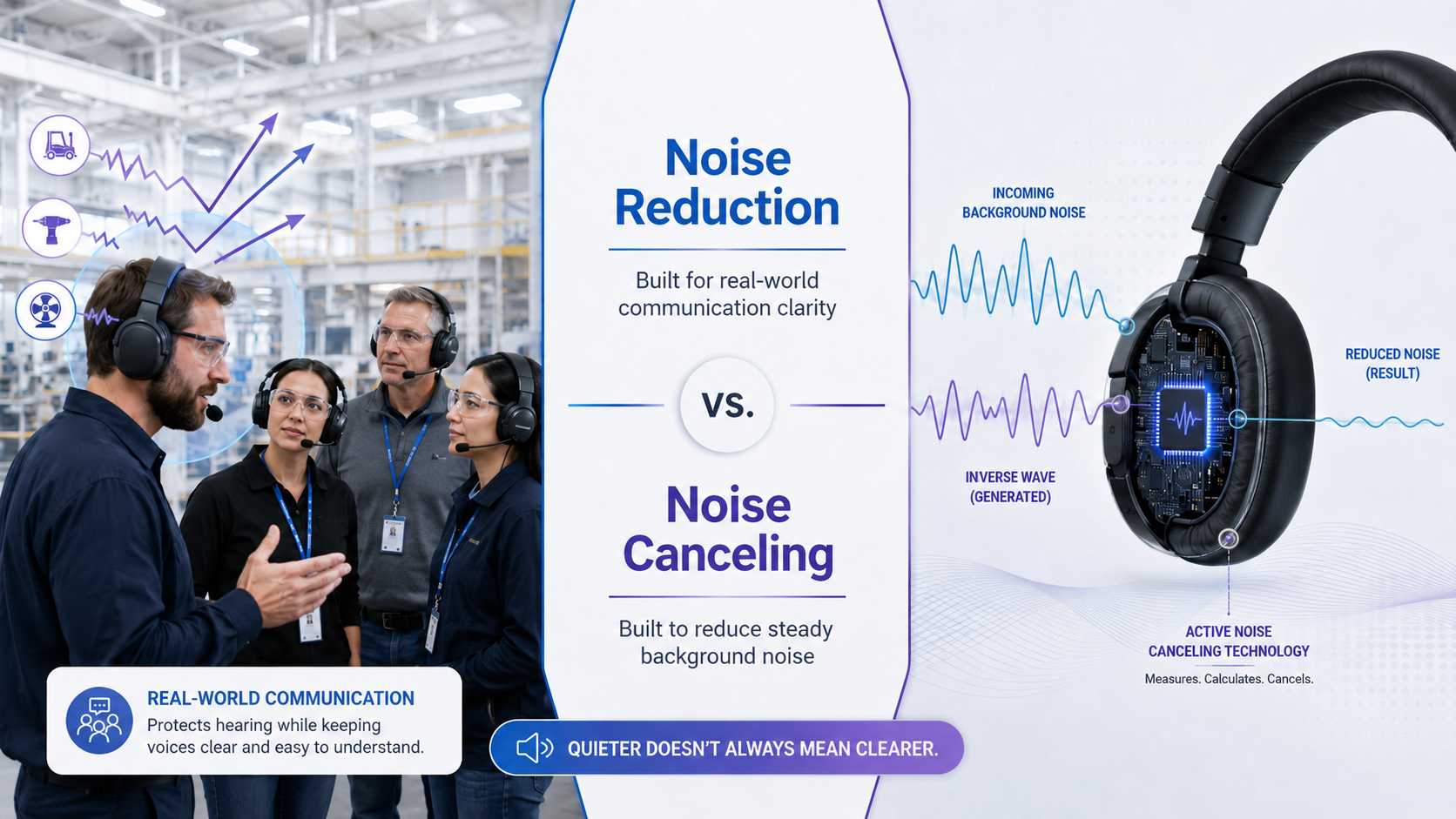
Noise Reduction vs. Noise Canceling Headsets: What’s the Difference?
Noise reduction and noise canceling are often used interchangeably, but they ......
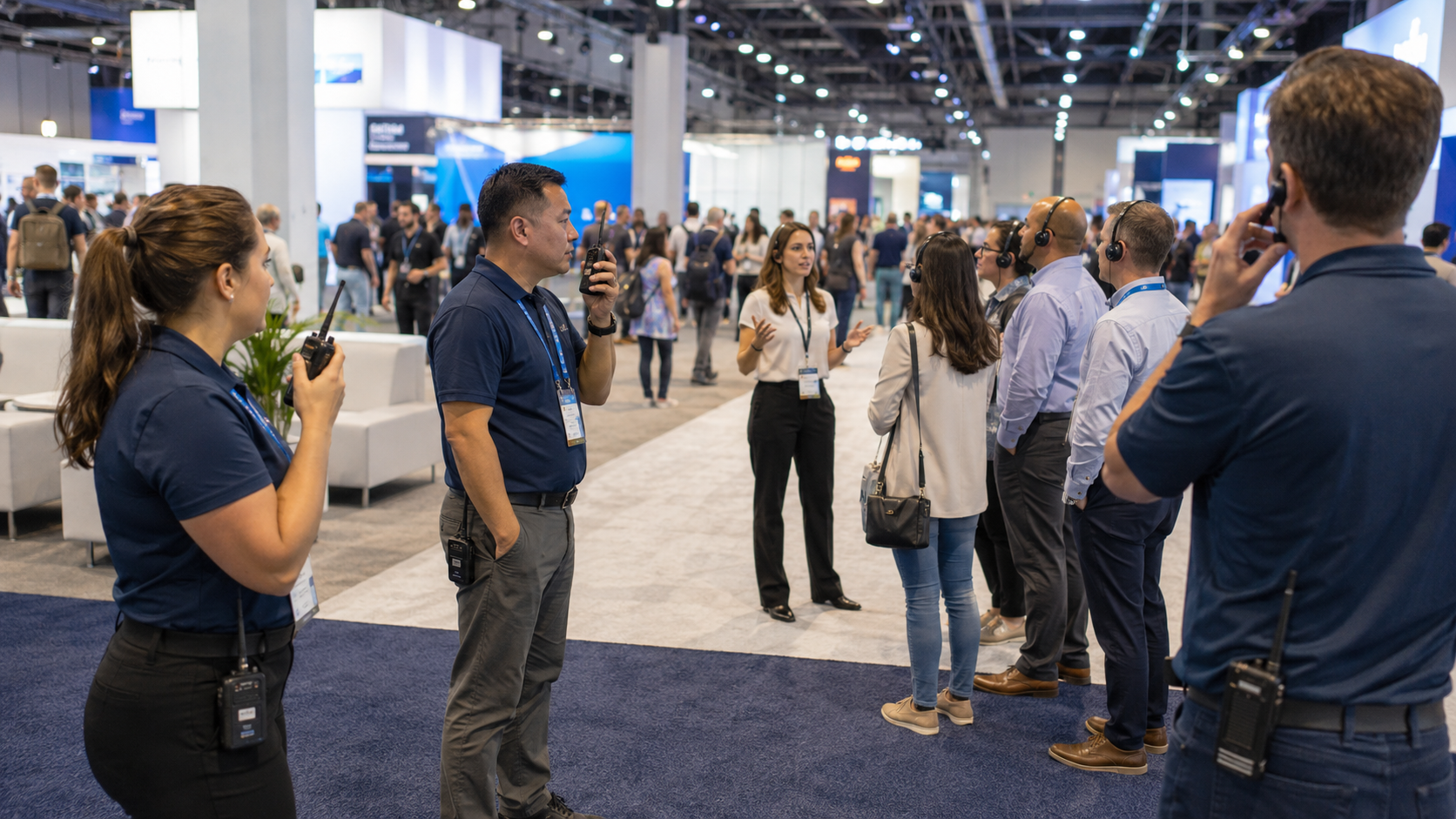
What Kind of Audio Communication Gear Do I Need for a Large-Scale Event?
When teams start planning a large-scale event, one of the most common questions ......
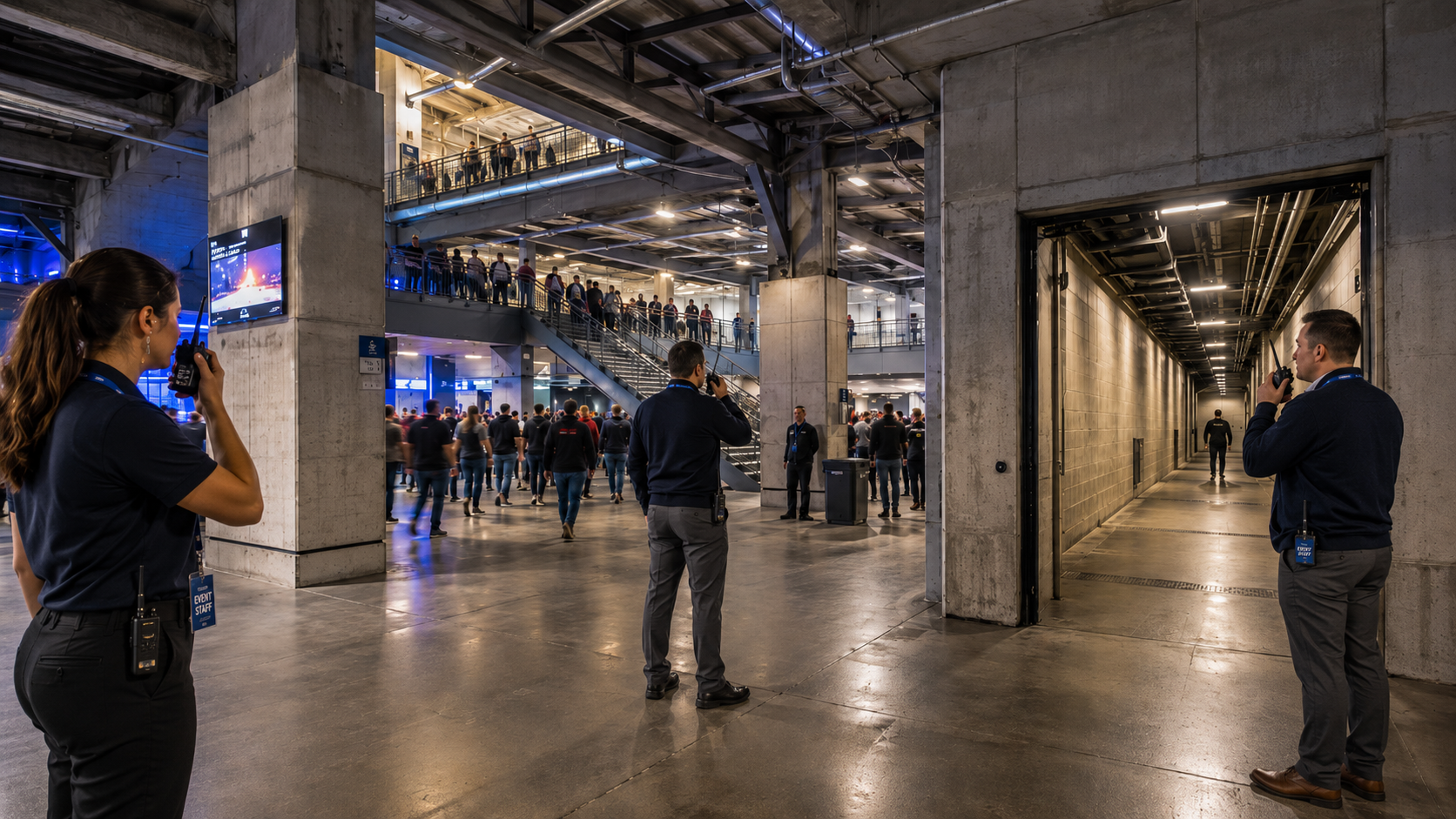
What Range Will My Two-Way Radios Get in a Convention Center or Stadium?
If you are planning communications for a convention center, stadium, arena or ......
