


Live Translation and Multilingual Tours with Wireless Headsets
A global event may host guests from multiple countries, each speaking different languages. One of the biggest challenges is providing language interpretation services without noise interference from surrounding environments.
Wireless headsets can help ensure your international guests have a clearer, more inclusive experience. The goal is to eliminate distractions and ensure:
- Guests can hear easily
- Guides can lead naturally
- Event teams can support audiences with different language needs
- Language interpreters can be heard
If you’re planning an event or tour with multilingual participants, this article outlines what you need to know.
RELATED: How Do Language Interpretation Headsets Work?
Common Uses for Multilingual Headsets
There are numerous settings where wireless headset systems can provide assistive listening or serve as a language interpretation tool. They are especially valuable when the event experience depends on moving groups, varied acoustics or multilingual listening, including:
- Plant tours
- Factory visits
- Facility walkthroughs
- Trade show VIP tours
- Investor or partner site visits
- Museum or campus tours
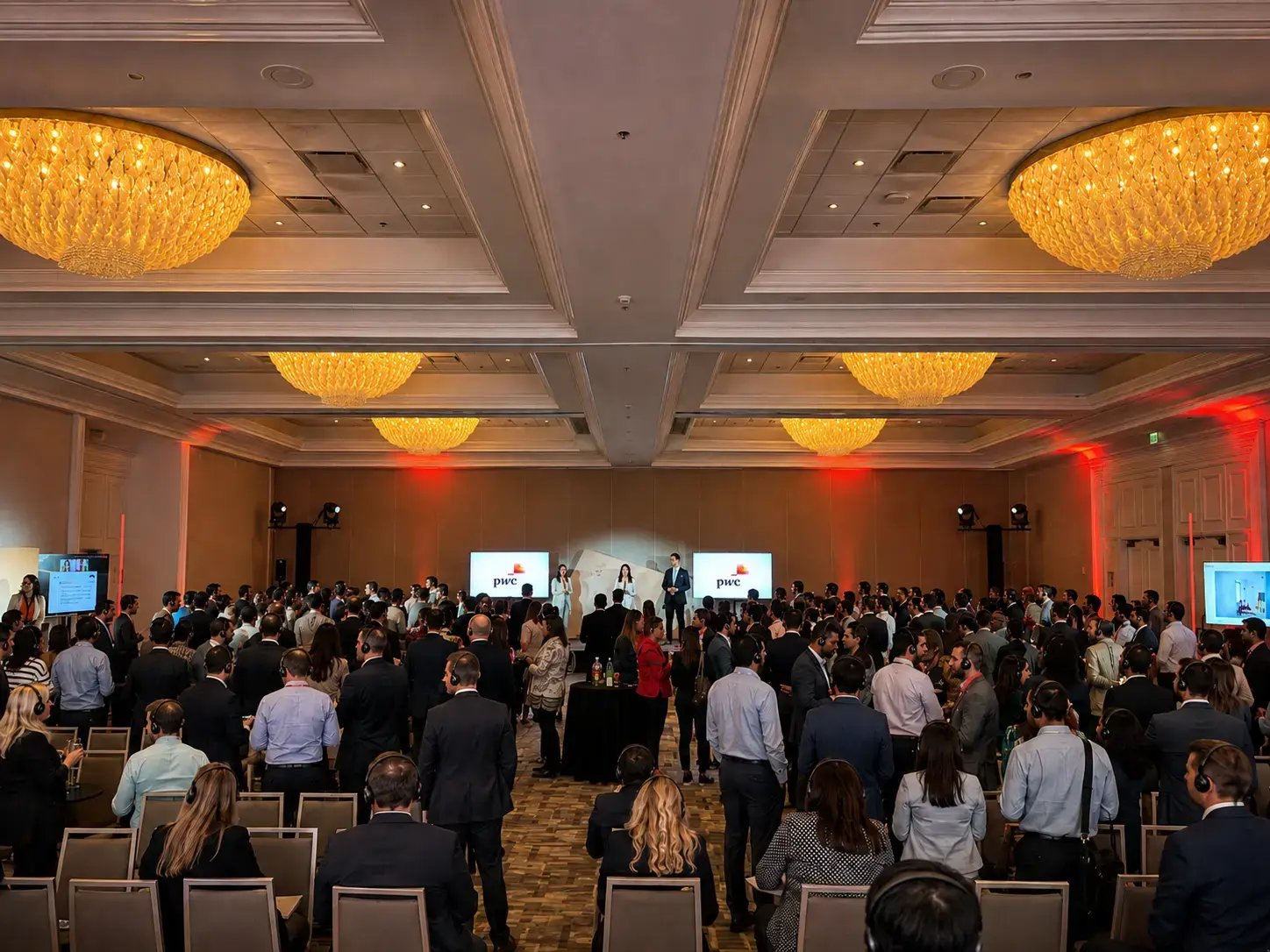
- Silent sessions at live events
- Multilingual guided training
- Global delegation visits
When an event is high-stakes and includes multilingual guests, using a wireless headset system can deliver clarity, comfort and inclusion.
The Challenges of Multilingual Tours
For a group with only a few people, a host can welcome the group and guests can gather around. An interpreter can also stand nearby to repeat key points in another language for a single international guest.
However, once you go beyond a few participants, that model breaks down. When the venue gets louder or the tour begins moving through active spaces, communication suffers:
- Guests drift farther from the speaker
- Some people hear only part of the message
- Guides start speaking louder than they should
- The pace slows because teams keep stopping to regroup or repeat
- Interpreters have to fight ambient noise and speak louder than necessary when translating for a guest
- If there is more than one interpreter, their voices compete with each other and the main host
Before you know it, the entire group is distracted, the tour guide is frustrated, and everyone disengages.
Use Case: Executive Plant Tour With International Guests
During an executive plant tour, some guests may need the original tour narration while others need live simultaneous interpretation. A wireless headset system lets both groups stay with the same movement pattern and receive the right audio feed without creating a bottleneck where everyone has to wait for an interpreter to repeat the host’s message.
5 Ways Wireless Headsets Improve Multilingual Tours
When a multilingual tour uses the right wireless headset system, several things improve at once.
1. Guests can hear comfortably without crowding the guide
This sounds basic, but it changes the whole rhythm of a tour.
Instead of everyone clustering around a guide or interpreter, participants can move more naturally and still hear clearly. That helps with spacing, flow and comfort, especially in active facilities, outdoor environments or large venues.
2. Interpretation becomes more usable in motion
In multilingual environments, interpretation often breaks down when the group is moving. Wireless headsets make it easier to deliver translated audio directly to the listener without stopping the tour every few minutes.
Televic Unite describes simultaneous interpretation equipment as a way to help participants experience conferences in their native language, which reinforces the broader principle. Language access works best when listeners can receive clear audio directly and consistently rather than relying on room acoustics or repeated verbal summaries.1
3. The experience feels more intentional and inclusive
When guests are straining to hear, asking others what was said or bunching awkwardly around the speaker or interpreter, the event feels less polished and less accessible. When they receive clear, direct audio in their own ears, the experience feels more intentional, more professionally managed and more welcoming to a wider range of attendees.
4. Accessibility improves for more people
Accessibility is not only about formal compliance. It is also about making sure more people can participate comfortably and confidently. Wireless headsets help attendees who are hard of hearing, attendees processing content in a non-native language, attendees who are farther back in the group, and attendees who may not want to keep interrupting the guide to ask for repetition.
That broader inclusion helps everyone, not just the people who would explicitly identify themselves as needing assistance.
5. Guides and interpreters can communicate more naturally
Without a headset system, speakers often compensate by shouting, repeating themselves or overexplaining. That is exhausting for the guide and less engaging for the audience. Wireless systems let the guide speak in a more natural voice and keep the delivery steadier across the full route.
What Should Be Considered When Choosing Multilingual Headsets?
It’s important to note that not all wireless headsets are designed to offer simultaneous interpretation on multiple channels for international guests. Some systems only offer one-way transmission and won’t work for language interpreters.
Beyond ensuring the headset system is engineered to deliver separate signals for interpreters, consider the following:
Clear, User-friendly Design
The audio controls need to be obvious, easy to manage, and align with your answers to the following questions: Who is transmitting the audio? Is it one guide, one interpreter or multiple language channels? Are attendees selecting a language feed or receiving a preassigned device?
Headset Comfort and Fit
Guests are much more likely to stay engaged when the device is lightweight, intuitive and easy to wear.
Reliable Group Management
According to Listen Technologies, some systems use docking stations to charge and pair devices, allowing for quick group management.2 The user experience depends heavily on how the system is staged and prepared before the group arrives.
Language Routing that Feels Intuitive for Guests
The technical setup may be sophisticated behind the scenes, but the guest experience should feel easy. If people don’t know which channel they need to tune into, which device is theirs or what to do when they need help, frustration mounts and the experience erodes quickly.
Hygiene, Charging and Turnover Planning
For tours that run back-to-back or span multiple groups, charging, sanitization, accessory swaps and device recovery all affect the experience. This is especially important at global events where audience expectations are already high and smooth turnover affects every group.
Experience Signal
Guests won’t remember the model number of the headset system (or care). They care whether they hear comfortably, follow the tour easily and feel included in the experience.
Common Mistakes When Choosing Multilingual Headsets
Choosing headsets is only a small part of creating a great experience. Even the best equipment may not be enough if a plan isn’t designed and executed properly. That’s why it’s so important to avoid the following mistakes:
Waiting Too Long to Address Multilingual Needs
A team may spend weeks refining content and guest flow, then treat interpretation audio as something that can be solved at the last minute. That often leads to rushed device planning, unclear distribution and avoidable guest confusion.
Assuming the Interpreter Will Handle Everything
Professional interpreters typically rely on the host of a tour or event to provide the necessary technology. If the guide, interpreter and audience devices are not organized into an easy-to-use system, even a strong interpreter can become frustrated and ineffective.
Underestimating the Physical Environment
A quiet executive briefing room is different from a loud plant floor, and an outdoor tour or a crowded show environment. Headset selection, microphone choice and guest handling may need to change based on the space. For example, a loud plant floor may require noise-canceling devices or even hearing protection headsets.
Recommended Wireless Headsets for Multilingual Tours
For language interpretation, we typically recommend either the ListenTalk or Televic Unite tour guide systems. They deliver clear two-way audio with multiple channel and headset options that minimize ambient noise. They also have built-in interpretation modes for easy setup. The systems support guided tours, group training and language interpretation.
How Wireless Headsets Elevate All Guest Experiences
Clearer personal audio helps more than just attendees who listen in a second language. Wireless headsets also accommodate attendees who are hard of hearing, those who struggle with ambient noise or anyone who might otherwise miss important details because they are not standing close enough to the speaker.
How well guests can hear has a real impact on how the organization is perceived. Overall, wireless headsets help all guests feel better taken care of by:
- Reducing listening fatigue
- Creating smoother movement through the experience
- Allowing international visitors to participate more fully
- Helping guides and interpreters sound calmer and more professional
- Reducing awkwardness when teams try to serve multiple languages informally.
- Improving accessibility in a very practical way
A multilingual tour is often part of relationship-building with partners, prospects, investors, media or executive visitors. In those settings, the way people hear the experience affects the way they judge the information being shared and the event itself.
When to Use Wireless Headsets for Live Translation and Tours
Wireless headsets for live translation should be used when the experience requires clarity, mobility and multilingual access for international guests, including:
- Tours where guests need to hear while moving
- Events where language interpretation needs to happen in real time without stopping flow or interrupting others
- Where polished delivery and accessible listening matter as much as the content itself
- Where inclusivity and accessibility matter
For teams serving global audiences, wireless headsets can be the difference between an event that technically works and one that feels thoughtfully designed.
Key Takeaways
- Properly designed wireless headsets are useful for plant tours, silent sessions, facility visits and multilingual group experiences
- The value of wireless headsets is not just clearer audio, but better guest experiences, smoother pacing, stronger language access and better inclusion
- Tours and guided experiences benefit from headset systems because they reduce strain, improve accessibility and increase professionalism
- Execution matters just as much as equipment selection, especially for device distribution, language routing and turnover
The Next Step for Choosing the Right Headsets for a Multilingual Tours or Live Translation Experiences
If your event includes plant tours, multilingual walkthroughs, international guests or silent-session formats, the headset system should match the experience you are trying to deliver.
Our team offers robust multilingual headset options to rent or purchase, and we can pre-program them so they’re ready when they arrive. We’ll even send you a free demo to try yourself, and help you scope the right wireless headset.
Contact our expert consultants today to talk through your needs, answer questions, and help you feel confident in your decision.
Frequently Asked Questions
Are wireless headsets better than speakers for multilingual tours?
Often, yes. Wireless headsets let guests hear the guide or interpreter directly without relying on room acoustics, crowd position or repeated summaries. That usually creates a clearer and more comfortable experience, especially when the group is moving.
Can wireless headsets support live translation during a plant tour?
Yes. This is one of the strongest use cases for wireless headset systems equipped with interpretation modes. They can help interpreters deliver translated audio directly to guests while the group continues moving through the facility.
Are tour guide headsets the same thing as two-way radios?
No. They serve different purposes. In this context, wireless headsets are for guided listening, interpretation and attendee experience. Two-way radios are typically for back-of-house operations and production coordination at large events.
When do multilingual events benefit most from wireless headsets?
They are especially valuable when the event includes moving groups, multiple languages, loud environments, guests with varied listening needs or formats where stopping repeatedly for translation would disrupt the experience.
How do wireless headsets improve accessibility during tours?
They improve accessibility by giving more attendees a direct, clearer listening path. That can help people who are hard of hearing, people listening in a second language, people farther back in the group and people who struggle in noisy environments stay more fully included.
Source:
1 Televic Conference, Simultaneous Interpretation Equipment
2 Listen Technologies, Tour Guide Systems

You May Also Like
These Related Stories
.jpg?width=4000&height=3000&name=20251118_050958%20(1).jpg)
Event Accessibility Made Simple with Implecho + ListenTalk
Event Accessibility Without the Headaches: How Implecho + ListenTalk Make Audio ......
%20(1).webp?width=1672&height=941&name=ChatGPT%20Image%20Jun%2010%2c%202026%2c%2009_13_40%20AM%20(1)%20(1).webp)
Capture, Transcribe and Repurpose Educational Tours Into Content
One of the most overlooked opportunities in expert-led tour experiences is the ......
Running Multiple Presentations in the Same Space Without Interference
If you’ve ever planned an event where two education tracks, three tour groups ......
We're Here to Help Guide You
