When the schedule is tight and the environment is loud, the best radio system feels almost invisible. Teams stay aligned, instructions land clearly, and coordination stays calm even as the pace picks up. That kind of performance is not luck, and it is not just “good radios.” It comes from a system designed for real conditions, with the right architecture, configuration, and readiness to match how people actually work.
This guide breaks down what makes a Comm Direct Rental - A division of Implecho Motorola radio rental system perform under pressure across construction jobsites, corporate events, conferences, music festivals, and beyond.
A “radio system” is more than radios
Most teams start by asking, “How many radios do I need?” That is a good question, but it is not the first building block of a system that holds up under pressure.
A radio system includes:
-
- Coverage design (direct-to-radio or via repeater)
- Frequencies and interference plan (licensed operation and coordination)
- Channel structure and talk groups (who talks to whom, and when)
- Audio clarity strategy (noise, mic technique, accessories)
- Power plan (battery runtime, charging, spares)
- Accessory mix (earpieces, speaker mics, headsets)
- Operational governance (labels, rules, quick training)
- Support and recovery plan (spares, swaps, escalation path)
Implecho’s brand standard is simple: plan intentionally, configure purposefully, and execute with accountability so communication performs in real environments.
Coverage That Matches The Environment: Simplex Vs. Repeater
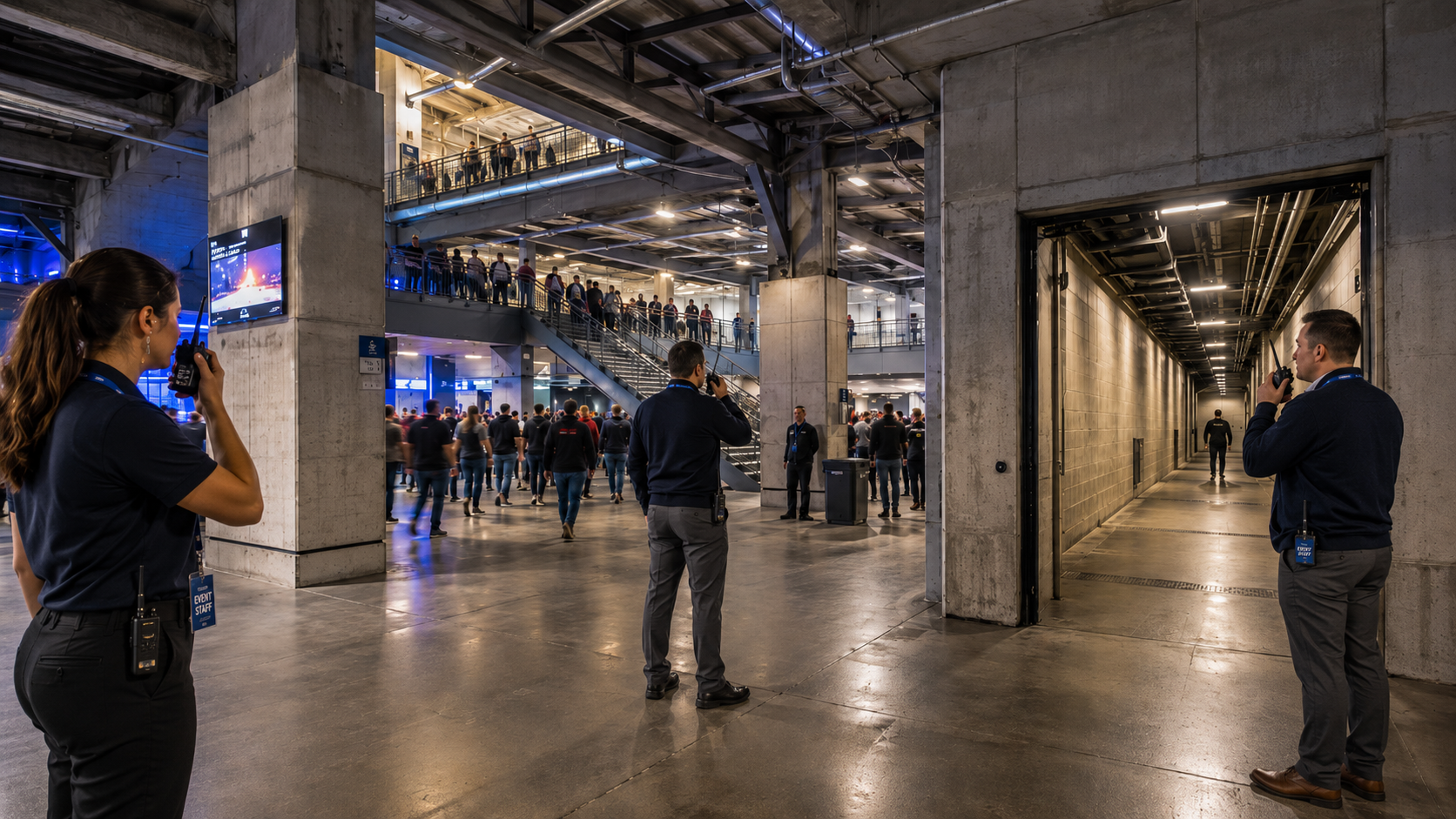
Pressure reveals coverage gaps fast, especially when teams move between back-of-house, docks, stairwells, ballrooms, parking, and perimeter posts.
Two common coverage modes:
-
- Simplex coverage
- Radios communicate directly on one frequency. It is simple and fast to deploy, and it can work great for smaller footprints or line-of-sight use.
- Repeater-based coverage
- A repeater receives and rebroadcasts radio traffic, extending range and improving reliability across larger areas and difficult structures. For multi-zone events, hotels with thick construction, stadium back-of-house, or spread-out jobsites, repeaters often turn “spotty” into “consistent.”
Practical rule: If your team needs reliable coverage through buildings, across campuses, or around terrain, plan for a repeater option early.
UHF vs. VHF and Why “Range” Claims Are Rarely The Full Story
The most useful range planning is not a miles number. It is “Will this work in my environment?”
-
- VHF generally favors open outdoor areas with fewer obstructions.
- UHF generally performs better around buildings and dense structures because it navigates obstacles more effectively.
For festivals, corporate venues, and urban sites, UHF is often a strong default. For open jobsites or large outdoor areas with clearer line-of-sight, VHF can be a fit. The right answer depends on where people will actually stand, move, and communicate. And we can help.
Clean Spectrum Planning: Licensed Operation and Interference Awareness
A system that works under pressure has a plan for where your radios live on the spectrum, especially in crowded RF environments like convention centers and major festivals.
In the U.S., many professional rental deployments operate under FCC Part 90 Industrial/Business licensing. The FCC’s Industrial/Business pool is designed to support business operations and includes frequency coordination practices.
If you use itinerant channels, the FCC notes that itinerant operations typically do not have interference protection from other itinerant users. That is not automatically a problem, but it makes planning and monitoring more important.
What to look for from a rental partner: guidance on licensed options, coordination, and a realistic approach to interference mitigation for your venue and city. We here at Implecho can help.
Channel Structure That Reduces Chatter and Speeds Decisions
Under pressure, clarity beats complexity. The goal is not more channels. The goal is fewer, cleaner lanes so the right people hear the right traffic.
A proven starting point for events
-
- Channel 1: Command or Ops
- Channel 2: Security
- Channel 3: AV / Production
- Channel 4: Guest Services / Front of House
- Channel 5: Facilities / Dock / Load-in
Then add specialty channels only when needed (medical, parking, transport, stage, VIP).
For corporate planners, the win is smooth vendor coordination and fewer last-minute escalations.
For festival producers, the win is fast problem-solving without cross-talk, with a system that crews can use intuitively, even in chaos.
If you have high user counts, consider trunking capacity
For larger operations, trunking approaches can increase the number of users who share a system efficiently. We here at Implecho offer MOTOTRBO Capacity Plus, which is positioned as a scalable single-site digital trunking solution designed for large user groups. Learn more about Capacity Plus here.
Audio Clarity: The System Must Cut Through Noise, Not Add To It
Your surroundings are LOUD. Think of forklifts, ballrooms, crowd roar, stage monitors, generator hums. Cutting through that noise is a challenge.
We here at Implecho offer newer MOTOTRBO portable radios which highlight features like AI-trained noise suppression and high loudness targets
(example: MOTOTRBOXPR 7000 series notes loud audio and noise suppression, plus rugged IP67 and MIL-STD-810H positioning).
Even with great radios, audio performance depends on:
-
- Mic placement and technique
- Accessory choice (earpiece vs speaker mic vs headset)
- Role-based setups (security and stage teams often need different audio tools)
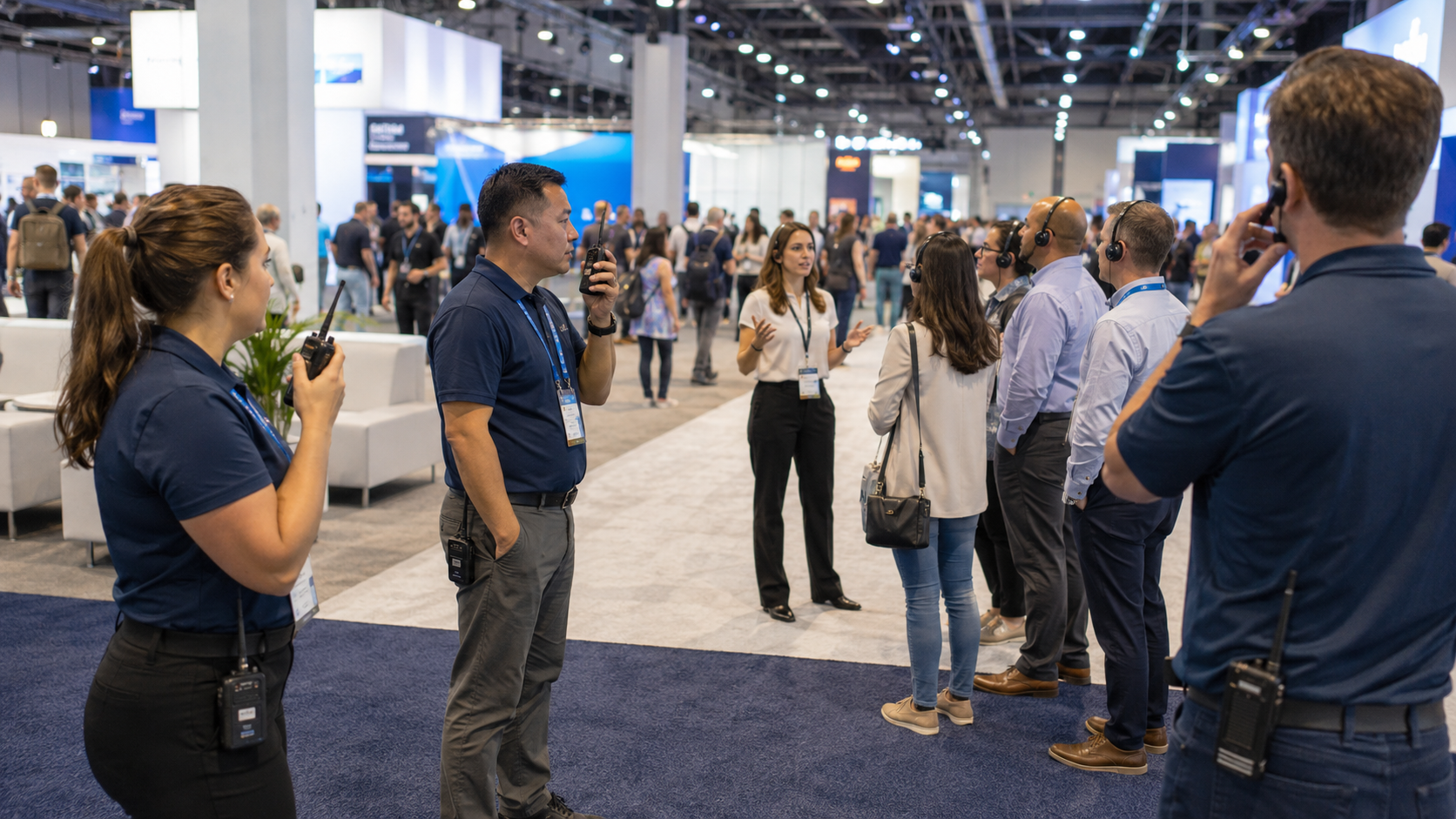
- Speaker mic for supervisors and mobile staff who need speed
- Acoustic tube earpiece for security, discreet comms, and loud areas
- Over-ear or in-ear headset for stage and production teams when clarity matters most
Accessory basics that hold up under pressure
-
- Speaker mic for supervisors and mobile staff who need speed
- Acoustic tube earpiece for security, discreet comms, and loud areas
- Over-ear or in-ear headset for stage and production teams when clarity matters most
Power and Battery Planning: Runtime Is A Design Choice
A radio that dies mid-shift is not a radio problem. It is a power plan problem.
Battery performance depends on transmit/receive patterns, signal strength, and temperature. Cold environments reduce effective runtime and can impact battery performance.
Motorola’s battery care guidance includes storing batteries in controlled temperature and humidity ranges, and using batteries according to their IP ratings.
A pressure-ready rental plan includes:
-
- Spare batteries matched to shift length and duty cycle
- Labeled chargers and a defined charging station
- A quick swap process that does not require “the one person who knows”
- A small buffer of spare radios for inevitable last-minute adds
Ruggedness Matters, But Only When Paired With Readiness
Jobsites and festivals are not gentle environments. Rugged ratings help, but readiness is what keeps things smooth.
When you’re evaluating, be sure to ask:
-
- Are radios labeled by role and zone, not just numbered?
- Are accessories matched to how teams will wear them for 10 to 14 hours?
- Is there a clear process for replacements and swaps?
Training That Takes Minutes, Not Hours
The best rental systems assume:
-
- rotating staff
- volunteers
- multiple vendors
- limited time for training
- quick-start cards
- standardized channel names
- “If this happens, do this” recovery steps
- a two-minute radio check script for team leads
A pressure-ready approach uses:
-
- quick-start cards
- standardized channel names
- “If this happens, do this” recovery steps
- a two-minute radio check script for team leads
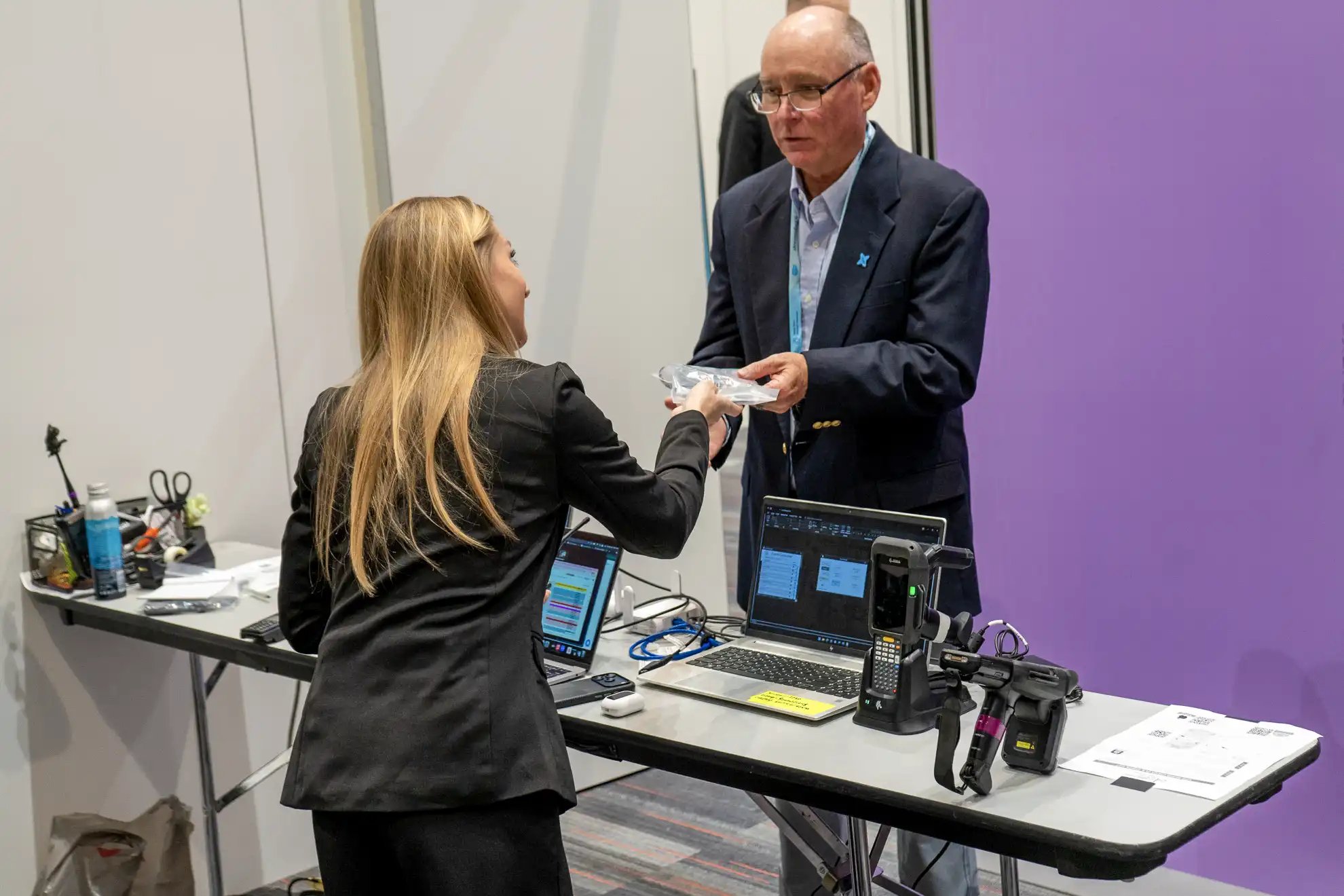
For teams that need radios to work immediately, Implecho’s onsite service and consultation turns “training” into a fast, repeatable rollout. From the first conversation, Implecho helps you select the right equipment for your footprint and use case, then makes sure it arrives configured for real-world execution, with packages clearly labeled, equipment organized by team needs, and channels and frequencies already set up. That means your staff is not guessing, sorting, or programming on site. They are simply powering on and communicating with confidence.
What sets Implecho apart is the option to bring in experienced technicians and trainers who handle the details with your team. Implecho can unpack and set up equipment, coordinate with your A/V partner, distribute devices, troubleshoot in real time, and keep everything running smoothly through the day. For higher-stakes environments, that combination of planning, pre-configuration, and hands-on support is what keeps radio communication clear when the pace picks up.
Performance Under Pressure Is Designed
The difference between radios that “work” and a radio system that performs under pressure is intentional design and real support. Coverage planning, frequency coordination, channel discipline, role-based accessories, battery strategy, and quick-start training all add up to one outcome: teams that stay calm, fast, and coordinated no matter how dynamic the day becomes.
Implecho brings that full-system approach to every Motorola radio rental. We go beyond the equipment to deliver a complete communication plan, configured for your environment and supported by people who know how events and operations actually run.
Ready to build a radio system that keeps your team in sync from setup to strike?
Learn more at: Two-Way Radio Rentals