At large events, radios are the backbone of operations. Security, medical, production, vendors, transportation, and guest services all depend on them to stay aligned in fast-moving environments.
But experienced event organizers know something important: simply handing out radios isn’t enough.
In a recent interview, Tim Van Hiel, VP of Technical Strategy & Integration for Comm Direct Rental, a division of Implecho, talked about how large events use radio data to understand usage patterns, optimize channel design, support safety teams and improve system performance over time. In this article, we share his thoughts on how events can run smoother each year, not by adding more technology, but by leveraging data to use what’s already there more intentionally.
RELATED: How Two-Way Radios for Large Events Align Teams
What types of events benefit from radio data monitoring?
Radio usage data — information showing how radios and talk groups are used — is valuable for nearly any large event, but its impact becomes most clear in complex environments where communication demands shift throughout the day or across multiple days and sites. While the fundamentals of good radio design stay the same, how those systems are used can vary widely depending on the event format, location and scale of the operation.
For example:
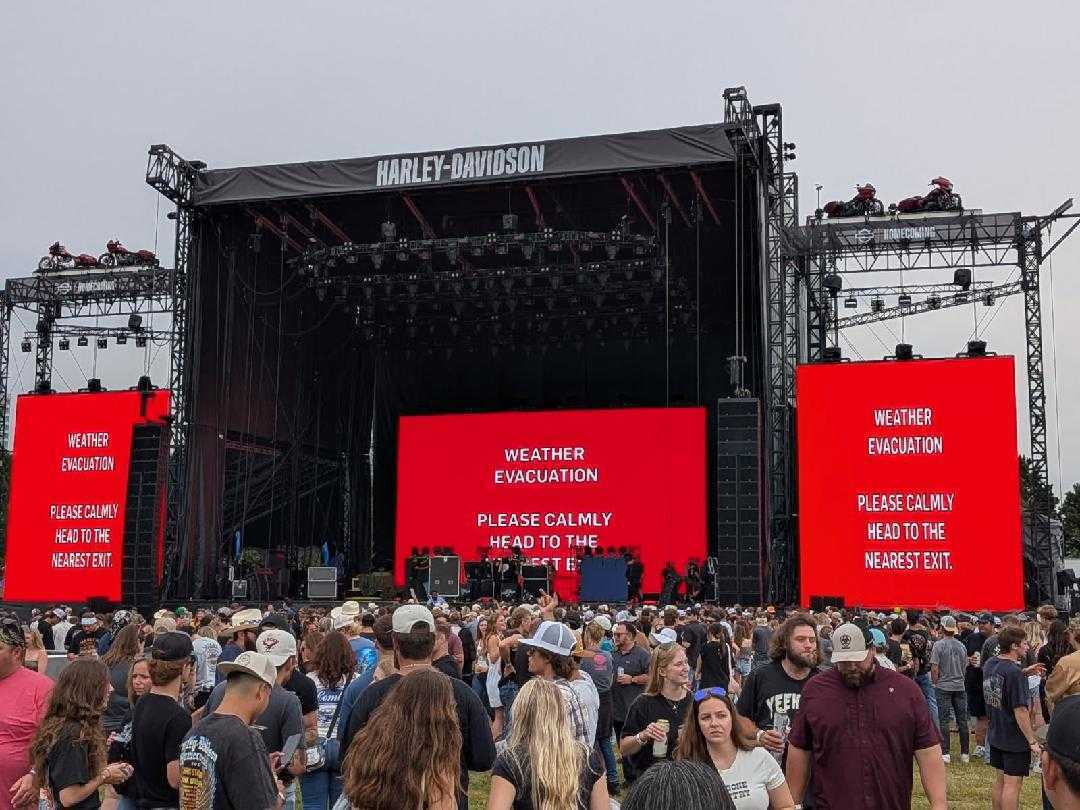
- Music festivals can vary in scale and complexity, often requiring robust radio management due to fast-paced programming, crowd control needs, safety concerns and multiple teams communicating at once across large and often remote geographic areas
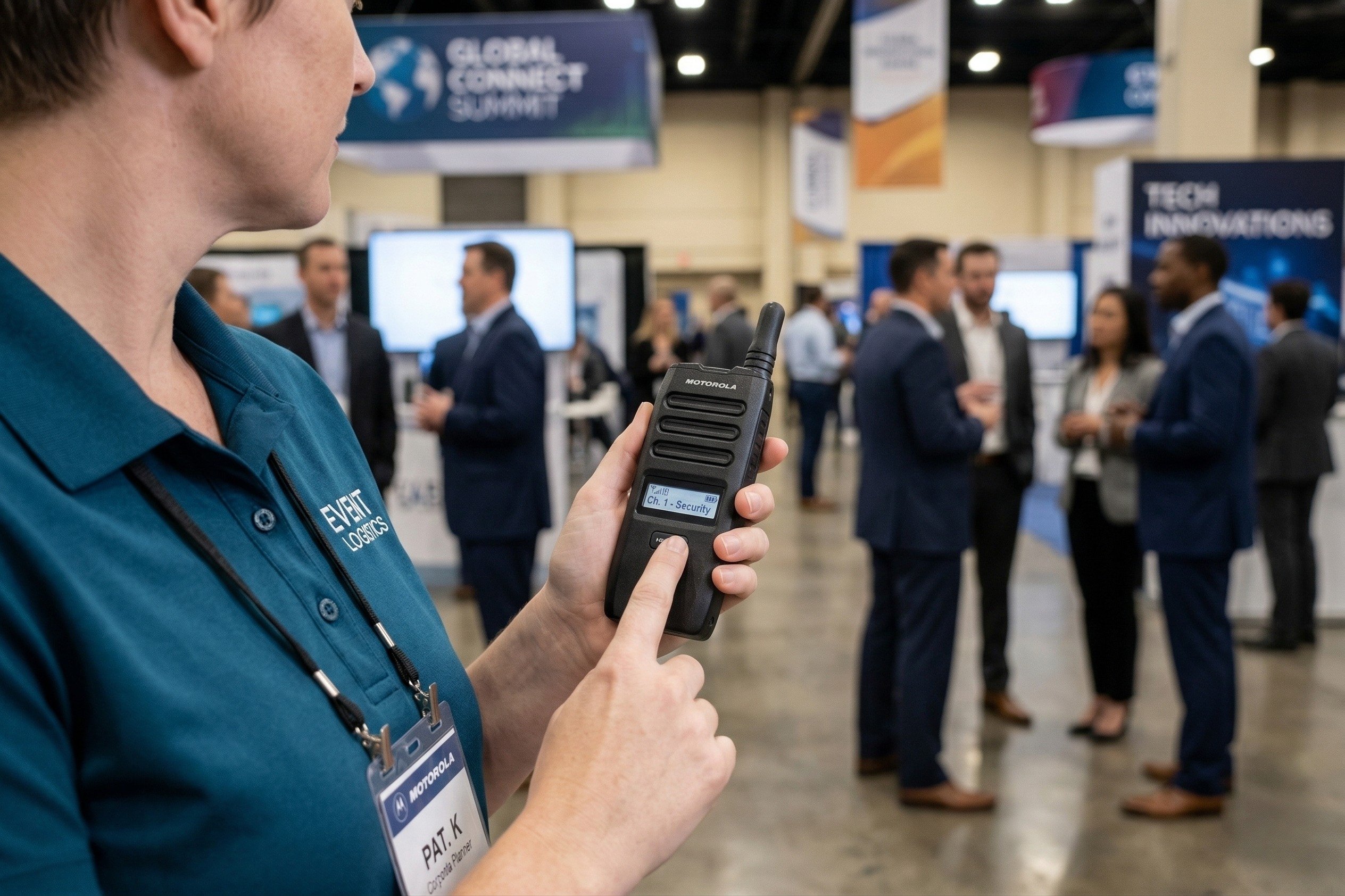
- Corporate events & meetings like tradeshows and conventions reveal clear shifts in usage from setup to showtime to teardown, helping teams plan capacity where it matters most
- Sporting events like national tournaments, the Olympics or World Cup can span across multiple sites and multiple days, requiring tighter frequency coordination due to dense RF environments, surrounding buildings and competing signals
What radio usage data is available for large events?
As events scale, communication patterns become more complex, making it difficult to understand how radios are used and by whom. Comm Direct Rental has worked with shows that involve:
- Hundreds or thousands of radios
- Dozens of departments with different priorities
- Teams that need private channels plus shared access to security or medical
Monitoring shows how talk groups are actually used, including:
- Departments requesting multiple channels but only using one or two
- Radios checked out that see little or no airtime
- Specific teams accounting for a disproportionate share of system usage
Comm Direct Rental, a division of Implecho, helps event organizers gain insights into usage reports to help streamline their operations. The reports help identify where systems can be simplified or where radios can be reassigned without losing effectiveness (and without exceeding budgets).
Which teams typically see the heaviest radio usage?
Security and medical teams are typically the heaviest radio users at any large event, and the most crucial. Accurate radio data helps ensure security and medical teams always have:
- Priority access for safety-critical talk groups
- Clean channels that aren’t congested by non-essential chatter
- Faster coordination when incidents occur
- GPS-enabled accountability for response teams
When communication works consistently and reliably, safety teams can focus entirely on people and situations instead of radios, which is exactly the point.
How does real-time monitoring support show-day decisions?
During live events, Comm Direct Rental will often use a monitoring platform like GenWatch 3 (GW3), a behind-the-scenes tool that lets event teams see how their radio system is being used. GW3 provides real-time visibility so technical teams can see:
- Which talk groups are active
- How much people are talking on each channel
- When communication peaks during the event
- Whether the system has enough capacity
- Potential congestion or interference
We like to think of these monitoring platforms as tools that help teams understand system health so they can stay focused on the event instead of the technology supporting it.
👉 Download the Event Audio Communications Planning Guide & Checklist
How does post-event reporting shape future events?
Adjustments can be made “on the fly” at events as needed, but we believe the biggest value of radio data shows up after the show ends. Post-event reports generated after an event summarize radio usage, airtime and system performance.
By reviewing these reports, event organizers can:
- Eliminate talk groups that saw little or no activity
- Combine channels that served similar purposes
- Reassign radios from low-use roles to higher-impact teams
- Adjust overall system size and capacity to better match real demand
This process can save money and reduce system strain while improving performance. Organizers know that their event typically won’t become more efficient by cutting corners. Rather, they improve by aligning communication design with how teams actually work, allowing them to become more streamlined over time, even as the event grows.
“Sometimes, departments request more channels than they really need. When you look at the data after the show, you can see channels that were never used and combine or eliminate them for next year.” — Tim Van Hiel, VP of Technical Strategy & Integration for Comm Direct Rental, a division of Implecho
How does on-site support proactively manage system performance?
Real-time data is great, but knowing what to do with it and finding the time to address radio communication needs isn’t always top of mind for event organizers. That’s why many large events rely on on-site radio management support.
Experienced radio technicians understand that performance can shift throughout the day as crowds move, equipment comes online and usage patterns change. Temporary structures, dense crowds, outside vendors and unexpected signal noise can also affect performance.
On-site teams proactively:
- Coordinate frequencies based on the local environment and surrounding activity
- Monitor signal strength, repeater health and system load
- Identify third-party radios or devices that may cause interference
- Adjust system behavior in real time to preserve clarity
Much of this work goes unnoticed by event staff, which is exactly the point. That same proactive mindset extends to how people use the radios themselves.
On-site support provides training as needed to reinforce practices like:
- Short, purposeful radio transmissions
- Proper use of speaker microphones and headsets
- Radios programmed so users only see the channels they need
- Simple guidance that matches real event conditions
Together, proactive system management and consistent user habits reduce unnecessary airtime, prevent congestion and keep communication clear across hundreds or thousands of users.
Explore Two-Way Radio Rentals for Large Events
How do two-way radio systems account for changing capacity?
While data can inform opportunities for minimizing a radio fleet or streamlining communications, Tim notes that a common mistake is underestimating how much capacity a system needs to support talk groups at scale.
Experienced providers will assess your event’s needs and intentionally design systems with:
- More capacity than the event technically requires (extra channels, additional infrastructure, built-in backup paths and redundancies, etc.)
- The ability to remove or reassign channels without disruption
- Infrastructure that continues operating smoothly even if a component drops out
Designing two-way radio systems for large events requires flexibility so communication stays fluid during peak moments like load-in, doors opening, artist movement, emergencies or crowd surges.
Use Data to Improve Communication With Every Show
Large events improve coordination and safety by using radio data to design smarter systems, monitor performance in real time and refine communication year after year.
Over time, complexity actually decreases, even as events grow in size and scope.
Our team of experts help large events understand how communication truly works on site, then use that understanding to make every show better than the last. We’re here to help. Contact an event communication expert at Comm Direct Rental, a division of Implecho, today.