


Tens of thousands of people can pack into a festival. There may be loud music and limited visibility, and getting a clear cell signal is nearly impossible.
When a crisis unfolds at a large event, relying on cell phones or internal two-way radio communication is not enough.
Sometimes the message needs to reach the entire crowd instantly.
We interviewed Tim Van Hiel, VP of Technical Strategy & Integration for Comm Direct Rental, a division of Implecho. He explains how Comm Direct Rental’s proprietary Voice of God event emergency mass notification system works, why it was created and why it has become a critical safety tool at major events.
RELATED: How Two-Way Radios for Large Events Align Teams
What is a Voice of God event emergency communication system?
Short Answer: Voice of God is an integrated broadcast system that allows the event command center to override a stage’s public address (PA) system in case of emergency to speak directly to attendees in real time. It exists for one purpose: delivering clear, authoritative direction to attendees during emergencies or imminent danger.
Security and medical teams may be fully connected on encrypted two-way radios, but that communication does not reach the public. If command cannot speak to the crowd instantly, they do not control the environment.
Voice of God solves that gap.
In Simple Terms, Voice Of God:
- Allows authorized command personnel to override the stage audio system
- Sends a live voice message directly through the PA system
- Can target a single stage or every stage on site
- Can be activated from a command console or an authorized portable radio
- Operates on a private, encrypted system
What Voice Of God Is Not
- A DJ microphone
- An artist-controlled feature
- A production gimmick
- A last-minute add-on during show day
- An AV accessory
The system is intentionally designed, tested and integrated into the event’s communication infrastructure before doors open. In high-risk environments where seconds matter, Voice of God becomes a critical safety communication layer between command and the crowd.
Common Event Emergency Response Myths
“We can just use the stage mic.”
In an emergency, leadership cannot rely on production to handle announcements and communicate emergency protocols quickly.
“We’ll figure it out if something happens.”
There is no room for improvisation in an emergency. Systems must be designed before doors open.
“That’s only for massive festivals.”
Risk is not defined by attendance alone. Dense crowds, weather exposure or complex venues can exist at many types of events.
What are the risks of not having an emergency communication system at large events?
Short Answer: The ability to communicate clearly determines whether a crisis situation stabilizes or escalates. Radios allow security to coordinate reinforcement, and medical teams can stage nearby. But without a dedicated emergency communication system that reaches attendees, event leadership loses its ability to guide crowd behavior in real time.
Here are several common scenarios that can be addressed with the Voice of God feature.
Crowd Surge Toward The Stage
When energy spikes and people push forward, security teams may see the pressure building at barricades. Voice of God can address the audience directly to tell attendees to step back, create space or remain calm.
Severe Weather
Weather systems can move quickly. Lightning, high winds or structural concerns may require an immediate pause in programming. Only a direct PA override can calmly instruct attendees to shelter, evacuate or clear specific areas before conditions worsen.
Active Safety Incident
In the event of an escalating fight, a dangerous individual entering the crowd or a confirmed threat on site, internal coordination is only half the response. Security and law enforcement radios can integrate to quickly address the situation, but attendees need clear, authoritative messaging to prevent panic and reduce confusion.
Emergency Evacuation
If part or all of a venue must be cleared, time and clarity matter. Congestion at exits creates a secondary risk, and misinformation spreads quickly through crowds. Only a system like Voice of God ensures every attendee hears the same instruction at the same moment.
Radios move responders. Voice of God moves people.
At scale, controlling information flow is how you control the environment. Without it, even well-staffed events can struggle to regain order once uncertainty spreads.
Stage-Specific Vs Site-Wide Announcements
Command can control one stage or the entire site depending on the scope of the incident. How can you know how far-reaching your announcement should be? The following general guidelines apply.

Why did Comm Direct Rental build the Voice of God system?
L
Short Answer: As Tim Van Hiel explains, the Voice of God concept was born after witnessing a large-scale tragedy where command had no practical way to communicate directly with the crowd during a crisis.
Massive PA systems were already in place and the capability to address the crowd existed. What was missing was access. Event command, public safety leaders and security directors did not control the most powerful communication tool on site.
That disconnect exposed a critical issue: having sound is not the same as having authority.
The Voice of God system was not created as a production enhancement. It was built to solve real safety gaps. In an emergency, command must be able to immediately override programming and deliver clear direction without delay, negotiation or confusion.
How does the Voice of God emergency communication system work?
Short Answer: The Voice of God function is directly connected to the audio console so that when activated, it automatically takes precedence over live music or playback. The system is not dependent on manual patching or show staff intervention.
Here’s How Voice of God Works In Plain Terms:
- The Voice of God unit is connected to the PA system with priority control
- Authorized personnel activate it from a command console or approved command radio
- When triggered, the music is automatically muted
- The live safety message is delivered immediately through the main PA
There is no waiting for a stage manager, no dependency on an artist pausing a performance and no scrambling to find the right microphone.
That reliability under real-world event conditions is what separates it from improvised solutions or production-dependent announcements.
How does Voice of God prevent unauthorized emergency broadcasts?
Short Answer: Voice of God is intentionally restricted to trusted, authorized command and safety leadership only. Access is not shared widely across production teams, stage managers or general staff.
The emergency communication system has strict controls to prevent accidental announcements and mixed messaging. If the wrong person can trigger it, the system itself becomes a liability, making authority unclear, eroding crowd trust or creating unnecessary panic.
Built-In Security And Encryption
Comm Direct Rental designed Voice of God as a private, encrypted system. Activation is not broadcast over open or unsecured channels. This prevents outside interference and ensures only approved devices can initiate a takeover.
Encryption protects against:
- Unauthorized radio access
- Signal spoofing
- External interception
- Rogue transmissions on shared frequencies
The goal is absolute control over who can speak and when.
Visual Confirmation Before Speaking
One of the key differentiators in Comm Direct Rental’s design is visual confirmation at the stage. When Voice of God overrides the PA, a strobe indicator provides confirmation that the system is live and that authorized personnel are fully in control.
How does Voice of God fit into a larger safety communication plan?
Short Answer: Voice of God is not a standalone feature. It is one layer inside a deliberately designed safety ecosystem.
- Two-way radios coordinate security, medical and operations teams
- GPS-enabled devices direct response with precision
- Redundant systems protect communication in the event of power failure, changing conditions or interference
- Voice of God communicates decisions to the crowd through PA systems
Voice of God functionality is part of a designed safety ecosystem, not an afterthought.
RELATED: How Two-Way Radios for Large Events Align Teams
If You Can’t Speak To The Crowd, You Can’t Lead It
Crowd safety depends on clarity, and in high-pressure moments, delays create confusion and confusion creates risk. Voice of God ensures leadership can deliver clear direction when conditions shift and decisions must be made immediately.
At Comm Direct Rental, a division of Implecho, we design systems for the moments no one wants to experience, but every event must be ready for.
Talk to an event safety communication expert today. We’ll help you design a system that works for your complex teams and supports event safety as its number one goal.
Subscribe
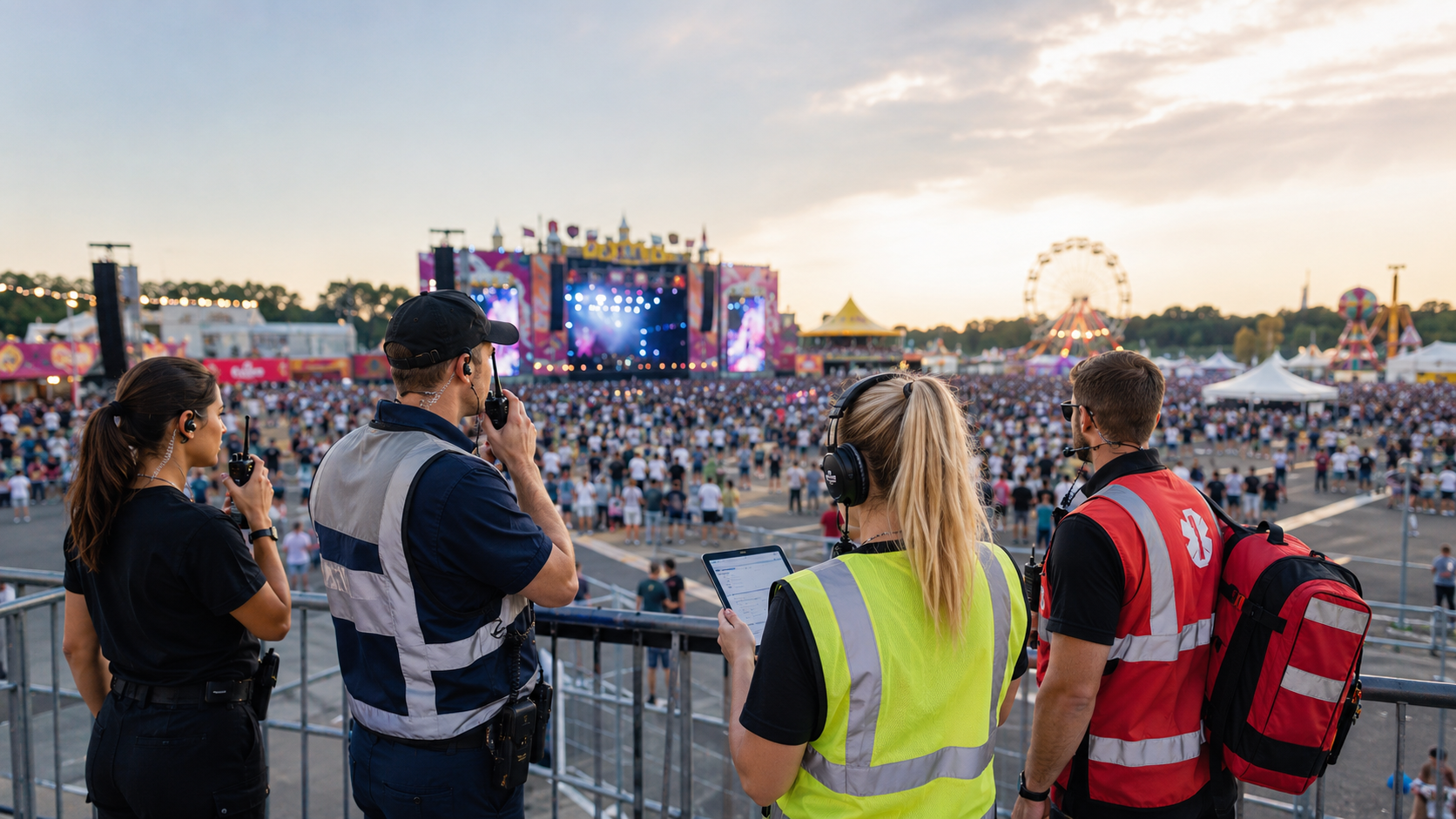
How Radio Rental Security Features Help Protect Your Event
How Security and Safety Features in Event Radio Rental Systems Protect Your ......
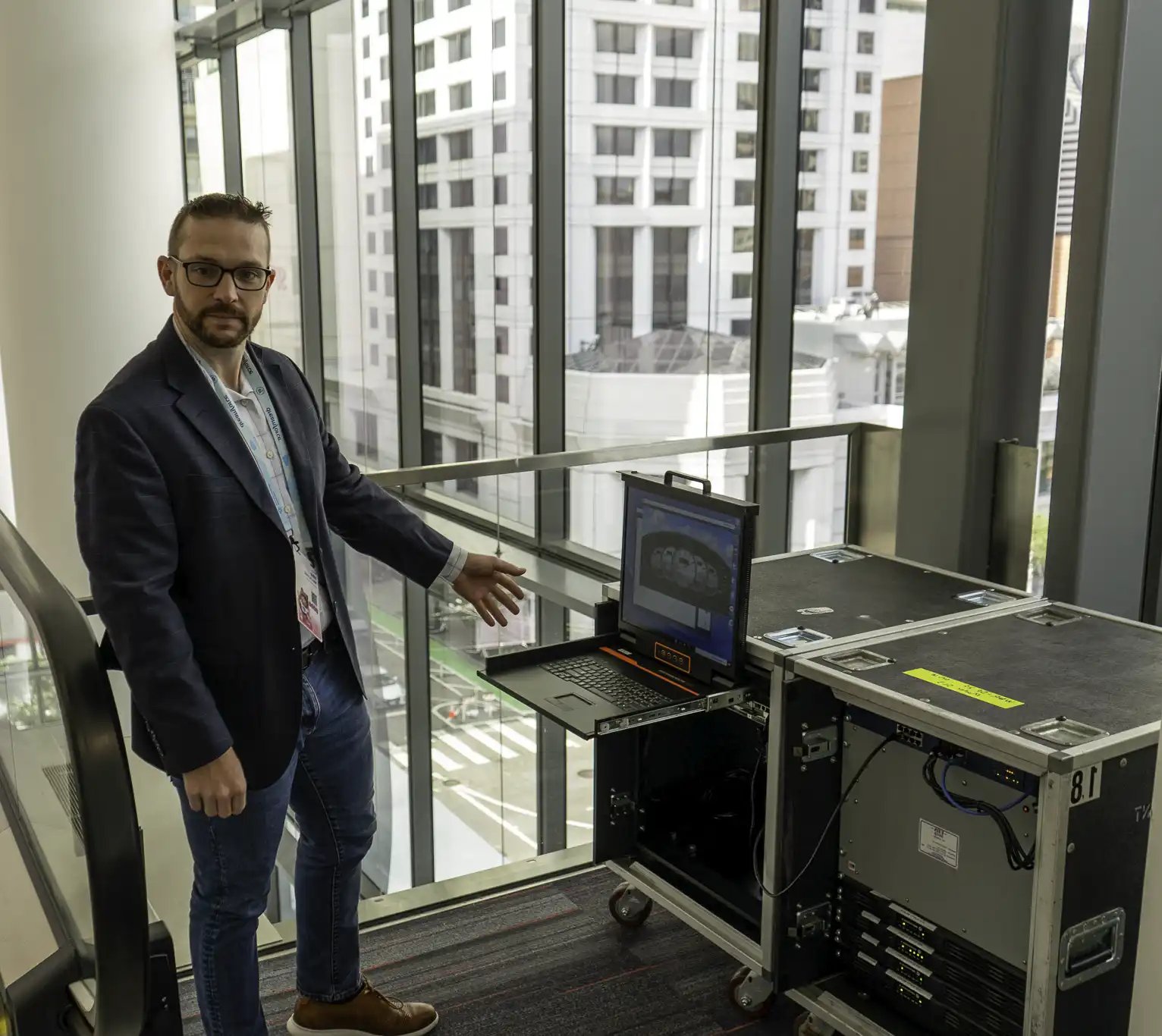
How Large Events Use Radio Data to Improve Coordination and Safety
At large events, radios are the backbone of operations. Security, medical, ......
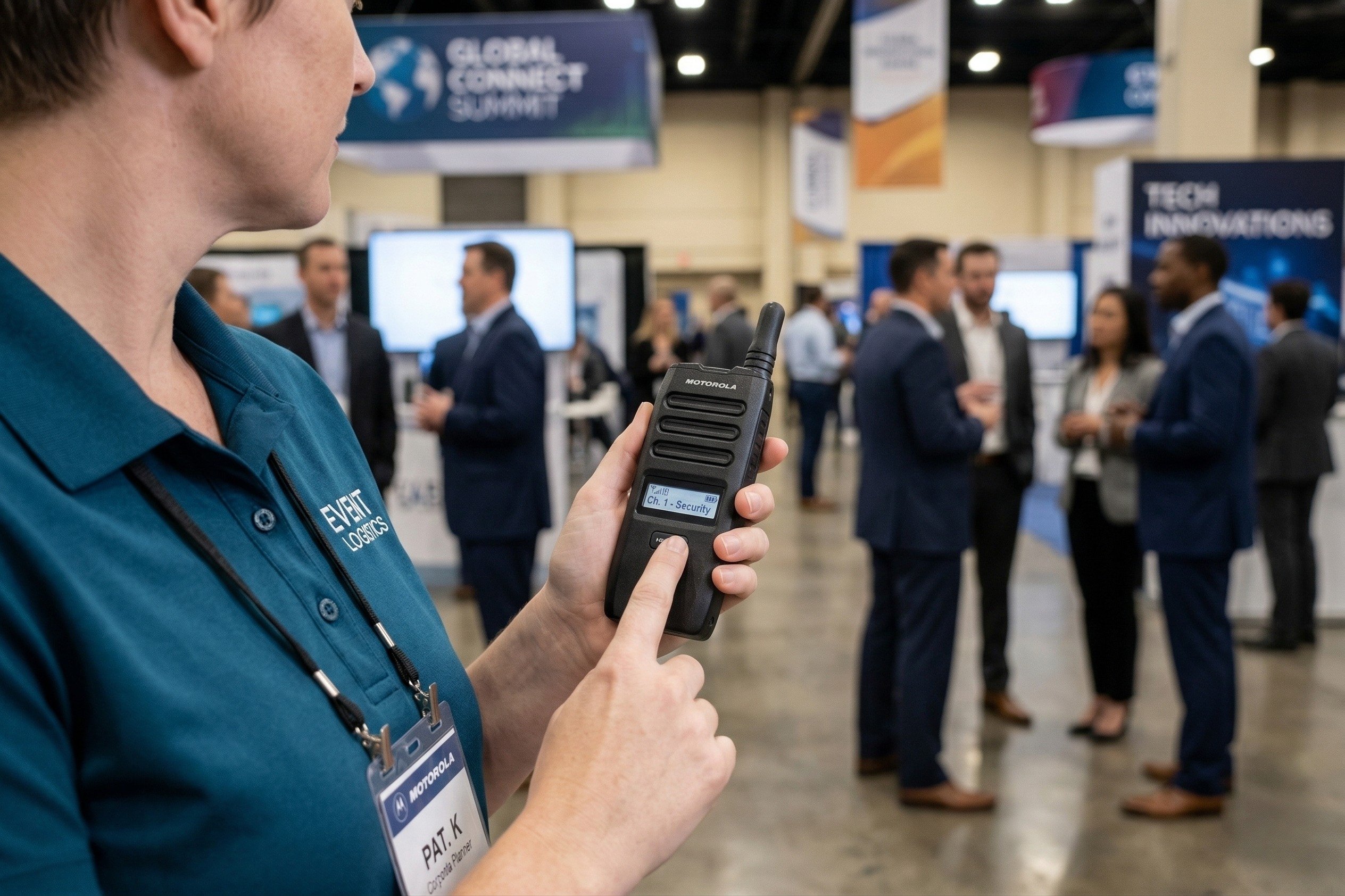
Motorola TLK vs. RF Radios for Events: How To Choose
Motorola TLK vs. RF Radio Rentals for Back-of-House Event Communication: How to ......
