Motorola TLK vs. RF Radio Rentals for Back-of-House Event Communication: How to Choose
Back-of-house communication keeps events moving smoothly behind the scenes, and the strongest shows rely on two-way radios to stay aligned when critical needs arise.
The radio system supporting those teams must match the size of the event footprint, the pace of communication and the operational structure behind the scenes.
For this article, we interviewed Mike Mieszkowski, Event Technology Manager for Comm Direct Rental, a division of Implecho, about how experienced event teams use Motorola TLK two-way radios, when traditional RF radios are the better option and how both systems can work together.
When should Motorola TLK radios be used for events vs. RF radios?
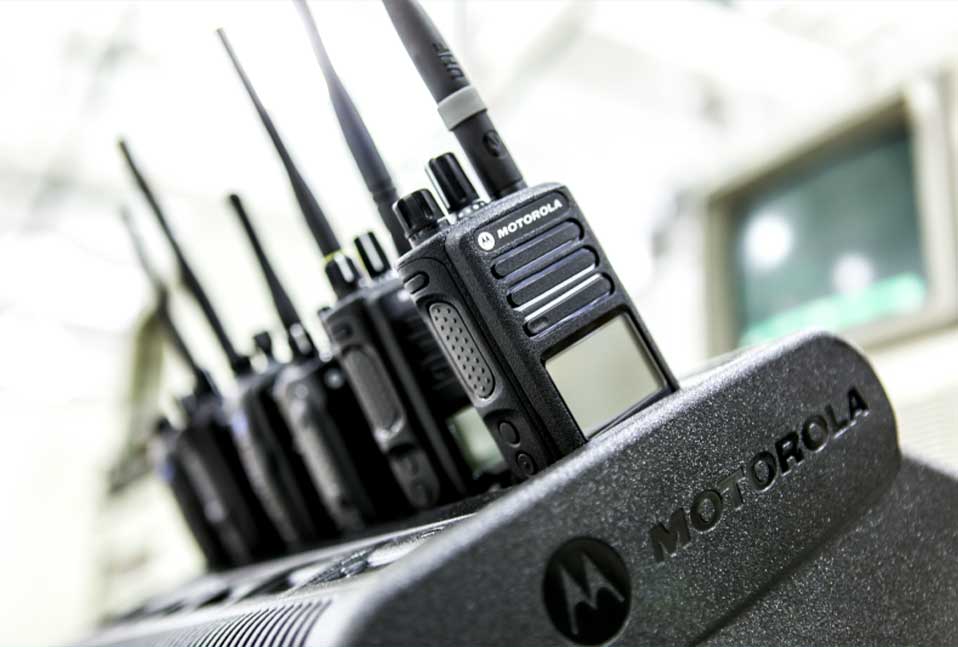
Motorola TLK push-to-talk radios are best used when events require wide communication coverage without installing radio infrastructure. They work well for multi-building venues, outdoor festivals and campus events where staff move across large areas. Traditional RF radios are typically better for dense operational environments such as production teams, security command and stage management where communication traffic is constant and immediate response is required.
Motorola TLK vs RF Radios: What’s the Difference for Event Communication?
Motorola TLK radios and traditional RF radios both provide push-to-talk communication, but they operate differently and serve different operational needs.
|
Feature
|
Motorola TLK Radios
|
Traditional RF Radios
|
|
Network
|
Cellular LTE
|
Radio frequencies
|
|
Infrastructure
|
No onsite repeaters required
|
Often requires repeaters or antennas
|
|
Coverage
|
Wide-area coverage through cellular network
|
Venue-based coverage
|
|
Deployment
|
Simple setup and remote programming
|
Requires radio system planning
|
|
Best Fit
|
Multi-building or large campus events
|
Dense, high-traffic environments
|
Neither option is universally better. The right choice depends on the footprint of the event and how teams are operating within it.
When Traditional RF Radios Are the Better Choice
Traditional RF radios remain the preferred solution when communication density and speed are critical.
RF systems provide direct radio-to-radio communication through a controlled radio frequency environment. This allows teams to maintain extremely fast transmission response and predictable signal control.
RF radios are typically used when:
- The event is concentrated within one venue or building
- Communication traffic between teams is high volume
- Instant transmission response is critical
- Cellular coverage may be unreliable
- A venue already has established RF infrastructure
Production teams, stage managers and security command often rely on RF radios because they support continuous operational traffic without depending on cellular networks.
For high-density operational communication, RF systems remain a critical tool.
Can Motorola TLK and RF radios be used together at the same event?
Yes. Many large events operate with hybrid communication systems that combine both TLK and RF radios.
This approach allows event planners to match the communication tool to the department’s operational needs.
For example:
TLK Radios
Often used by teams that operate across larger areas:
- Transportation and shuttle coordination
- Parking operations
- Offsite logistics teams
- Multi-building venue staff
Because TLK radios operate through cellular coverage, these teams remain connected even when moving well beyond the primary venue footprint.
RF Radios
Often used by teams working within a concentrated venue footprint:
- Production
- Stage management
- Security command
- Site operations
These teams rely on fast, high-volume communication to coordinate real-time activity.
A hybrid communication system allows events to maintain tight operational coordination inside the venue while extending coverage across the broader event footprint.
What departments typically use back-of-house radios?
Back-of-house communication connects the operational teams responsible for executing the event. While every event is structured differently, most large events include radio communication for several core departments, including:
Production
Production typically acts as the coordination hub for the event. This team manages show flow, staging, audio, video and lighting execution while coordinating with multiple operational departments.
Security
Security teams manage crowd safety, emergency response and coordination with medical services. Communication must allow security leaders to respond quickly and escalate incidents when necessary.
Site Operations
Site operations teams oversee the physical environment of the event, including infrastructure, utilities and logistics.
Food And Beverage
Large conventions and festivals rely on coordinated communication between concessions, catering teams and site operations to manage service flow and vendor coordination..
Medical
Medical teams require direct access to security and event operations to respond to incidents quickly.
Additional back-of-house teams might include:
Additional departments may include transportation, IT, signage, vendor coordination and artist hospitality depending on the event.
- Transportation – requiring long-distance communication
- Signage – Manages wayfinding and branding installations
- Vendor Coordination – Manages multiple third-party participants
- Artist Hospitality – Caters to the needs of artists and may also coordinate media
- IT – Handles technology hardware, networking, and software such as ticketing systems
- Camping Operations – Coordinates campers, site traffic and logistics
When back of house teams communicate clearly, the attendee experience feels effortless. Decisions move quickly, issues are resolved before they escalate and departments stay aligned without confusion.
RELATED: How Two-Way Radios for Large Events Align Teams
Can’t we just use cell phones?
Radios are built for quick action, letting you reach the right team with the push of a button, while cell phones often mean calling around and routing messages back and forth before the right person is looped in.
RELATED: Why Two-Way Radios Are Better Than Cell Phones for Events
How To Build A Channel Plan That Works Across Events
A clear channel plan helps ensure the radio system supports the event’s operational structure.
1. Start With The Event’s Operational Structure
Before assigning channels, map the departments responsible for running the event.
Identify:
- Which teams require internal communication
- Which departments must coordinate frequently
- Where escalation should occur
The radio structure should reflect how the event operates behind the scenes.
2. Balance the Number of Channels
Find the right balance:
- Too many channels create uncertainty and hesitation about where to communicate
- Too few channels can overload a single channel with too much traffic
The goal is to maintain clarity without fragmenting communication unnecessarily.
3. Use A “Main” Channel and “Sub-Team”
Large departments often benefit from layered communication.
Example:
- Security Main
- Security Vendor A
- Security Vendor B
Routine coordination stays within vendor channels while major incidents escalate through Security Main.
This structure keeps communication organized while maintaining visibility across teams.
Planning prevents layers. Layers create delay.
“When teams lack a direct line to the right department, communication funnels through multiple layers of management, adding time and duplicated effort, and delaying resolution. Tools like Motorola TLK provide direct, department-level communication that keeps teams aligned and issues contained before they escalate.” — Mike Mizekoski, Event Technology Manager | Comm Direct Rental a division of Implecho
What are two-way radio channel naming convention best practices?
Clear channel names reduce confusion during fast-moving situations. Motorola TLK radios allow up to 16 characters for channel labels, providing enough space for descriptive naming. Here are best practices for channel assignments:
|
Best Practice
|
Why It Matters
|
Example
|
|
Use full department names whenever possible
|
People recognize channels instantly without scrolling or guessing
|
“Security Main” vs. “SecM1”
|
|
Label primary coordination channels with “Main”
|
Signals where to go for department-wide coordination
|
“Production Main”
|
|
Place medical or emergency channels at the top of the list
|
Fastest possible access during urgent situations
|
Channel 1: “Medical”
|
|
Avoid nicknames, abbreviations, acronyms, and vendor-specific labels
|
Reduces confusion for vendors, volunteers and rotating staff
|
“Sanitation” or “IT” instead of vendor names
|
Example channel list:
- Medical
- Production Main
- Security Main
- Site Ops
- F&B Ops
Simple naming allows users to quickly identify the correct channel without hesitation.
Do Motorola TLK radios require on-site support for live events?
Motorola TLK radios do not always require onsite support. Smaller events with fewer users often operate smoothly without dedicated support staff. However, larger events frequently benefit from having onsite radio support available.
Most radio issues during events are not system failures. They are typically small user-level issues such as:
- Loose speaker microphones
- Dirty accessory connections
- Bent accessory pins
- Low batteries
An onsite technician can resolve these problems quickly by cleaning connections, replacing accessories or swapping radios. They can also proactively address issues like battery changes to streamline communication.
For large events, this helps keep communication consistent throughout the event.
How to Choose the Right Radio System for Your Event
Choosing a radio system begins with understanding how the event operates. Event organizers should consider three questions:
What is the footprint of the event?
Large campuses or multi-building events may benefit from TLK radios, while contained defined venues or operational areas may be better served by RF radios.
How many departments will rely on radio communication?
User volume and operational complexity influence channel planning and system design.
Who will manage the communication system?
Some organizations distribute and manage radios internally, while others rely on a provider to handle programming, channel planning and onsite support.
When communication systems are designed around the event’s operational structure, teams can coordinate quickly and resolve issues before they escalate. Motorola TLK radios can be a strong solution when wide-area coverage is required, especially when combined with clear channel planning and operational communication practices.
Talk to a radio rental expert today to help you design a communication plan that matches how your teams actually work onsite, and explore two-way radio rentals for events.
Explore Large-Scale Event Communication Systems