What's the Difference?
A plant tour and a conference session at a large event look nothing alike on the surface. One moves through a working facility, the other sits in a room.
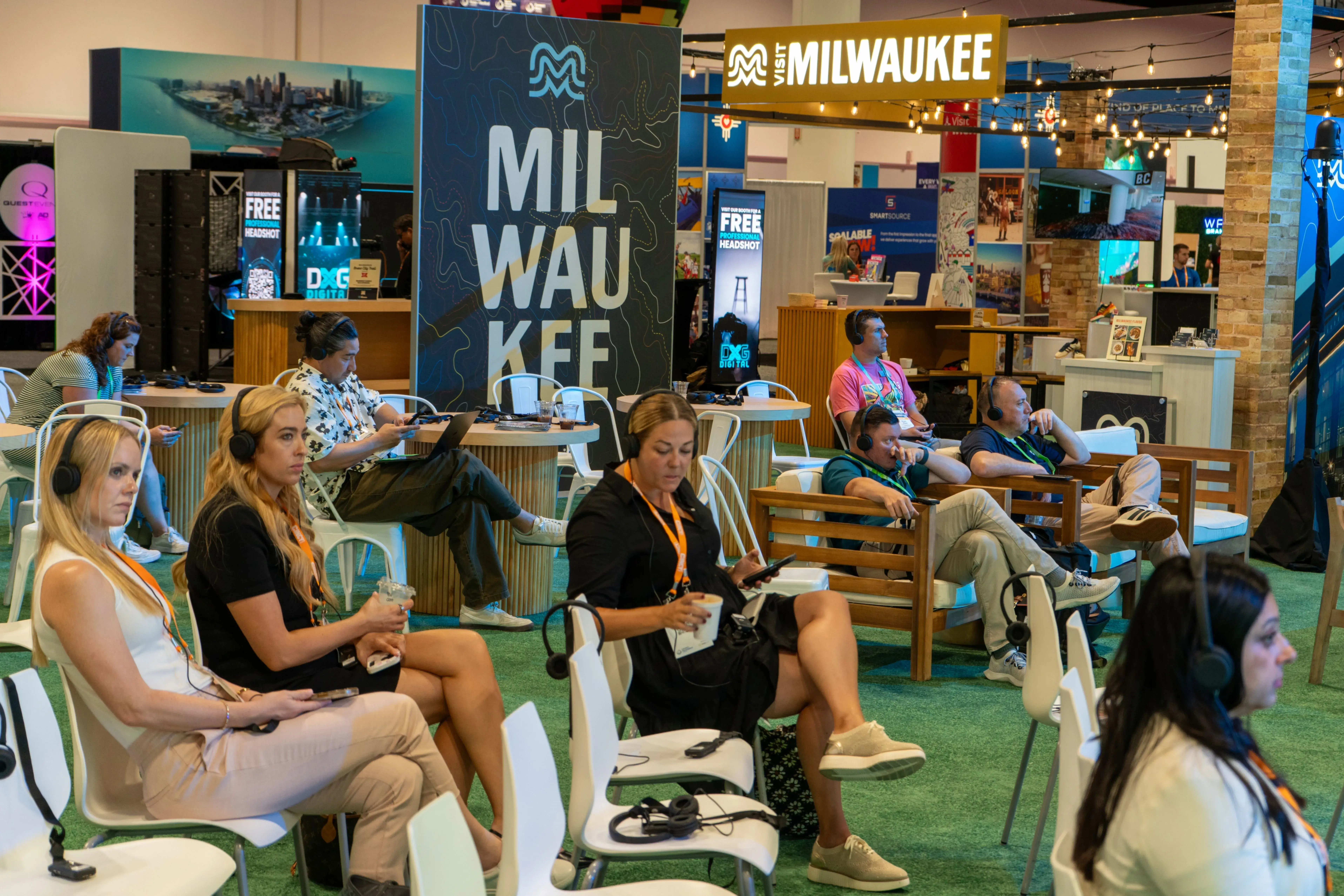
But the underlying challenges are identical: a single guide or presenter needs to be heard clearly by an entire group, and normal voice projection cannot reliably cover the distance, noise or room size.
Can a large event and a facility tour use the same headset? In many cases, yes. This article outlines the top considerations and headset recommendations regardless of the venue or event.
Article at a Glance
-
- Different Environments, Shared Audio Challenges
- One-Way vs. Two-Way Headsets: Choosing the Right Setup
- Comparison Table: Large Plant Tours vs. Large Events
- Where Headset Systems Fit: Plant Tours and Conferences
- How to Plan Your Communication Setup
- What Should You Look For in a Headset Communication System?
- Consider Support Beyond the Equipment
- Frequently Asked Questions
Different Environments, Shared Audio Challenges
On a plant floor, noise comes from machinery, ventilation systems and the general hum of an active facility. In a conference hall, it comes from room size, overlapping sessions nearby and simple crowd volume.
Either way, when the guide's voice does not reach everyone:
-
- The group starts to drift
- People at the back stop hearing key details
- Tours slow down as the group bunches up to stay within earshot
- Attendees lose the thread of a presentation they came specifically to hear
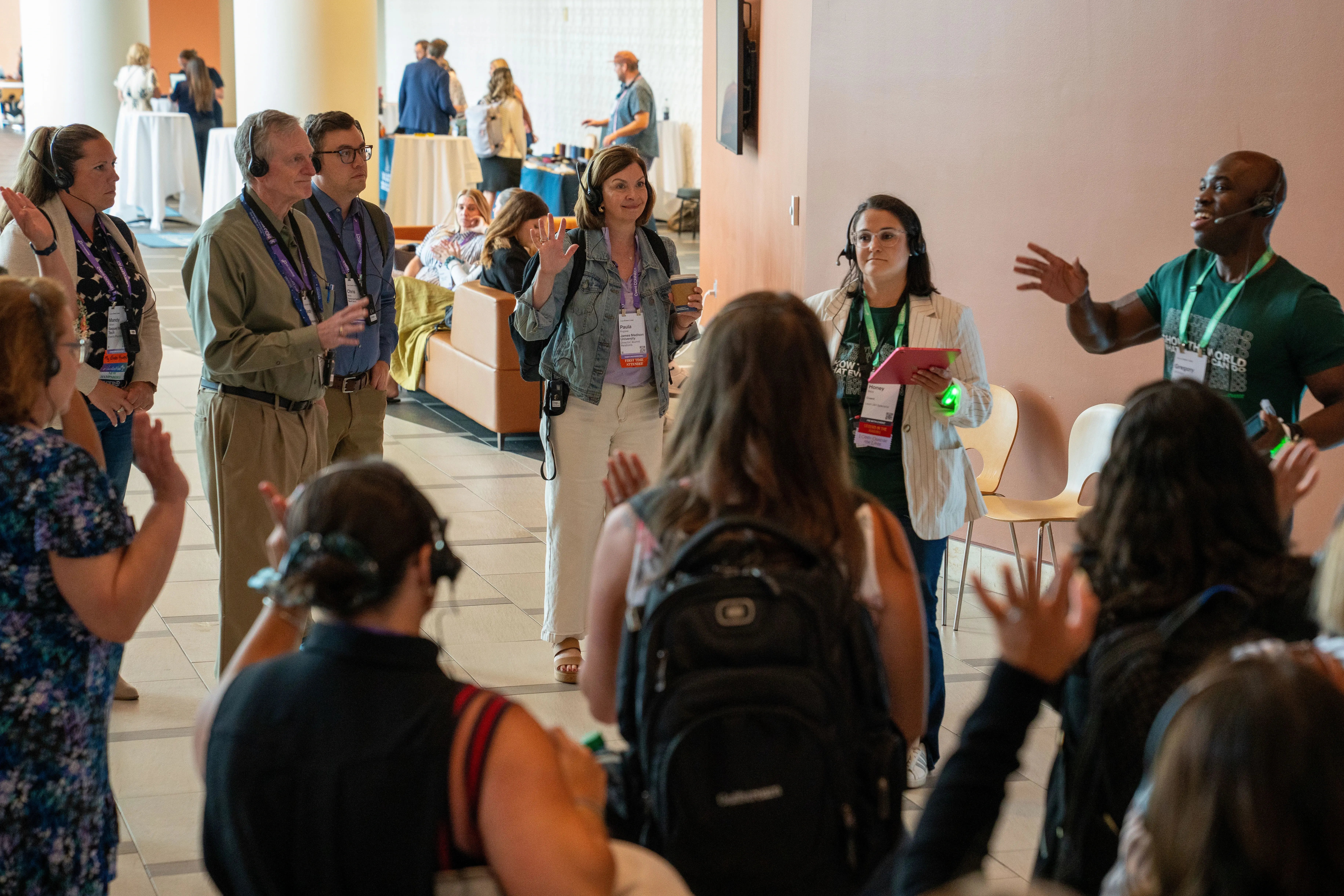
The environments are entirely different, but the challenges are the same. A headset communication system removes those variables entirely. Every attendee gets a direct audio connection to the guide or presenter, so the group stays together and the message stays clear.
One-Way vs. Two-Way Headsets: Choosing the Right Setup
Not every tour or session needs the same kind of connection. The first planning decision is whether the group needs to simply listen, or whether they need a way to engage with the guide or to each other. Getting this right shapes everything else about how the system is set up.
There are two main options for headsets:
One-Way Systems: Built for Guided Listening
A one-way system gives every attendee a clear line to the guide or presenter's voice, with no return channel. This is the right fit when the goal is focused, guided listening:
-
- A facility walkthrough where the guide is narrating each stop
- A keynote or general session where the audience is there to receive information, not respond in real time
One-way setups keep the experience simple for large groups by allowing attendees to focus entirely on the guide or presenter.
Two-Way Systems: Built for Interaction and Coordination
A two-way system enables communication in both directions, allowing guides, attendees, facilitators or staff to speak when interaction is part of the experience. This functionality supports both types of experiences.
Two-Way Systems for Plant Tours:
-
- Attendees can ask questions without stopping the group
- Designated safety and facility personnel can share important information in real time
Two-Way Systems for Conferences:
-
- Support interactive breakouts
- Enable live Q&A
- Enhance collaborative sessions where conversation is just as valuable as presentation
Match the Headset Setup to the Moment
A single event does not have to choose one option for everything. A conference might use one-way systems for keynote sessions and two-way systems for interactive breakouts. Similarly, a plant tour might use one-way communication for the general walkthrough and two-way communication for executive discussions, training sessions or tours where attendees are encouraged to ask questions throughout the experience.
How Do Headset Systems Differ for Plant Tours vs. Large Events?
| Consideration | Plant Tours | Large Events & Conferences |
|---|---|---|
| Primary challenge | Machinery, ventilation and facility noise | Large rooms, crowds and overlapping sessions |
| Typical format | Moving group led through a facility | Seated sessions, breakouts or guided experiences |
| Communication goal | Keep the group together and guide audible | Keep presentations clear and sessions organized |
| One-way systems | Ideal for narrated walkthroughs | Ideal for keynotes and general sessions |
| Two-way systems | Useful for Q&A, training, language interpretation and safety communication | Useful for breakouts, workshops, language interpretation and live Q&A |
| Headset considerations | May require NRR-rated or hard hat-compatible options | Lightweight earpieces are often appropriate |
| Multiple groups | Separate channels for simultaneous tours | Separate channels for concurrent sessions |
| Best setup depends on | Noise, safety requirements, group size and interaction | Venue, session format, group size and interaction |
Where Headset Systems Fit: Plant Tours and Conferences
Both use cases benefit from the same underlying technology, but the right setup depends on the communication goals of the experience. Some situations call for clear, guided listening, while others are designed to encourage conversation and participation.
Large Plant and Facility Tours
-
- Customer and prospective client tours where a guide leads the group through the facility
- Executive, investor and VIP visits where every attendee needs to hear the same message clearly
- Employee onboarding, training and continuous improvement walks where questions and discussion are encouraged
-
- Keynote presentations and general sessions where attendees are focused on a single presenter
- Guided venue tours, campus tours or sponsor activations with a tour leader
- Breakout sessions, workshops and facilitated discussions where participant interaction adds value
How to Plan Your Communication Setup
Once you've decided between a one-way or two-way system, the next step is planning how your experience will operate. Consider the size of each group, whether multiple tours or sessions will run at the same time and how your communication channels will be organized so each guide or presenter can communicate clearly with their own audience.
A little planning upfront helps ensure every participant has a clear listening experience from start to finish.
-
- Determine the appropriate group size for each guide or presenter
- Assign separate channels for simultaneous tour groups to keep each guide connected with their audience
- Use dedicated channels for concurrent breakout sessions or presentations running in the same venue
Taking time to plan group sizes and communication channels before the event helps ensure tours and conference sessions stay organized, on schedule and easy for participants to follow.
What to Look for in a Headset Communication System
The right headset system depends on your environment, your audience, and how the experience will be delivered. Beyond communication features, consider how the equipment will perform in the setting where it will be used.
-
- Coverage and reliability: Choose a system that provides consistent coverage throughout your facility, campus or event venue so attendees remain connected from start to finish
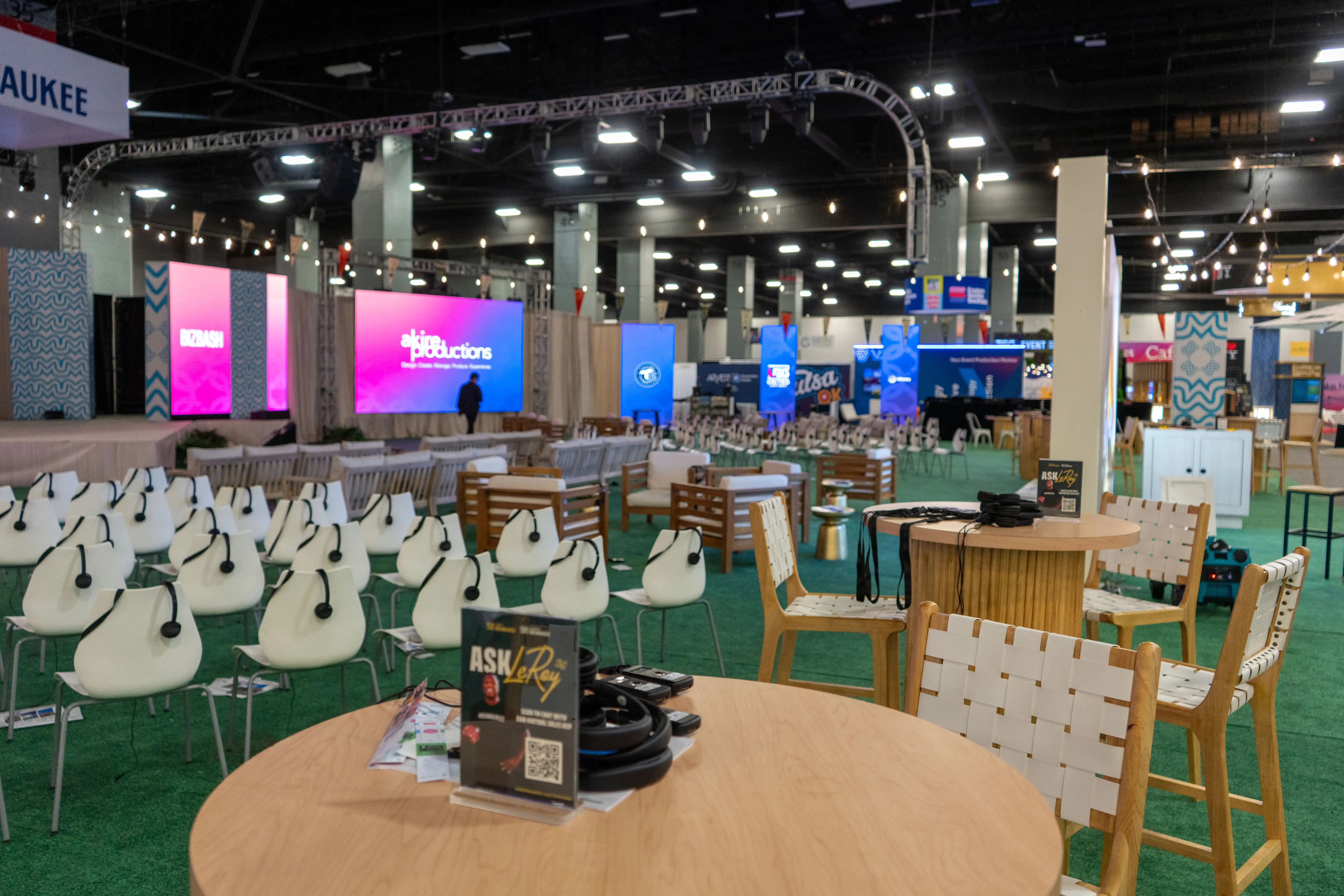
- Headset style: Match the headset to the environment. Lightweight earpieces are often ideal for conferences, campus tours and quieter settings, while manufacturing facilities may require NRR-rated hearing protection headsets or hard hat-compatible options that allow attendees to hear the guide while remaining compliant with site safety requirements
- Channel capacity: Ensure the system can support your communication plan, whether that's a single guided tour, multiple simultaneous tour groups, or concurrent breakout sessions
Implecho offers one-way and two-way tour guide systems and headsets for rent or purchase, including:
Our team takes a consultative approach, helping match the right system and headset configuration to your environment, group size and communication goals.
Consider Support Beyond the Equipment
The right headset system is only part of a successful tour or event. Just as important is having a partner who helps you plan, prepare and support your team from start to finish. Consider whether your headset provider offers the following:
-
- Consultative planning: Get personalized guidance on selecting the right system, headset style, group sizes and channel assignments based on your venue, audience and communication goals
- Training and onboarding: Consultations and quick-start guides, setup videos and practical training resources help guides, presenters and event staff feel confident before the event begins
- Expert support when you need it: Whether you need fast-turn delivery, remote technical assistance or onsite support for larger events, experienced specialists are available to help keep your event running smoothly
At Implecho, we believe great communication starts long before attendees arrive. Our team works alongside you to recommend the right solution, prepare your staff and provide support throughout your event so you can focus on delivering a great experience.
Contact us today to determine a right-sized communication solution for your event or tour.
Key Takeaways
-
- Plant tours and conferences share the same core challenge: one guide or presenter needs to be heard clearly by an entire group
- One-way systems suit guided listening, walkthrough narration, keynotes and general sessions
- Two-way systems support interaction, questions and collaborative conversations across tours, training sessions and breakout sessions
- A single event can combine both options depending on the moment
- Planning group sizes and communication channels before the event helps tours and conference sessions stay organized and on schedule
- Implecho supports every event or tour with consultative planning, training resources and expert optional onsite support, not just equipment
- Implecho offers free demos on headsets and tour guide systems, plus fast-turn service and delivery options nationwide
Let Us Help You Plan Your System
Whether the event is a single plant tour or a multi-track conference, Implecho can help scope the right mix of one-way and two-way headset systems well ahead of the date.
And speaking of planning ahead, reach out to our team today. At Implecho, we specialize in matching audio communication solutions to your environment, and help ensure your tour or event runs smoothly from setup to send-off.
Frequently Asked Questions
What is the difference between a one-way and two-way headset system?
A one-way system lets attendees hear the guide or presenter with no return channel, ideal for guided tours and keynote sessions. A two-way system enables communication in both directions, supporting interactive breakouts, questions during a tour and real-time conversations between guides, staff and attendees.
Can one event use both one-way and two-way systems?
Yes. Many conferences use one-way systems for keynote sessions and two-way systems for interactive breakouts, and many plant tours use one-way communication for general walkthroughs while offering two-way channels for training sessions or tours where questions are encouraged.
How many people can run on a single channel?
Group size per channel depends on the venue and the goal of the session, but planning this ahead of the event date ensures every attendee can hear clearly without overcrowding a single channel.
Does Implecho offer demos before booking a system?
Yes. Free demo options are available for headsets and tour guide systems, so planners can confirm the right fit before committing to a full order.
How far in advance should a headset system be booked?
Booking as far in advance of the tour or event date is recommended to allow time for channel planning and fast-turn service and delivery. However, we've turned orders around within a couple days in a pinch.