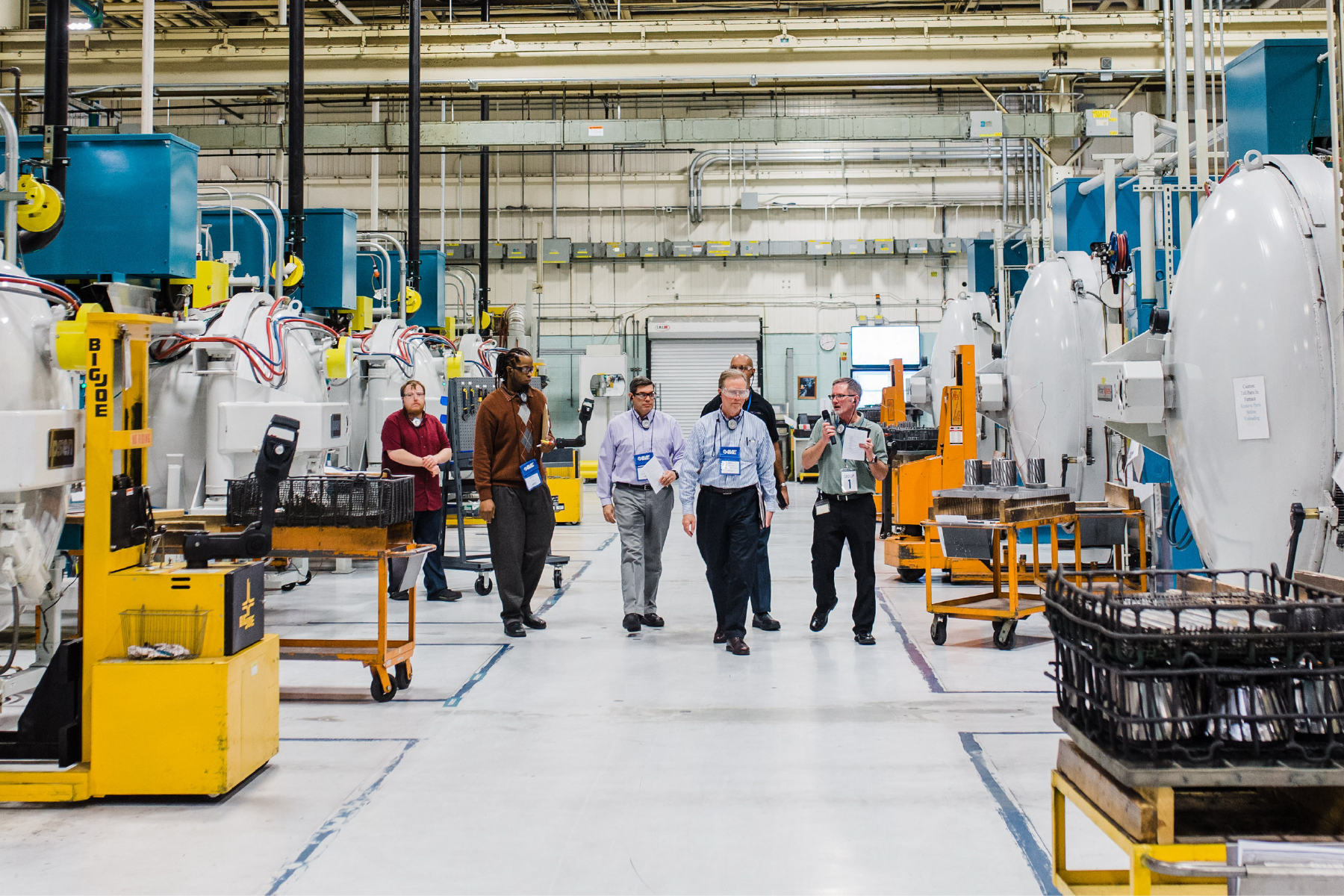
When a prospective customer visits your facility, they are rarely there to see the building.
For manufacturers in particular, an effective facility tour can influence how they view your company. It can turn capabilities that are difficult to communicate in a presentation into something a customer can actually see, hear and understand.
But that only works when the tour itself makes it easy for visitors to engage with what is happening around them.
RELATED: Successful Plant Tour Communication & Planning Tips
A Facility Tour Turns "What We Do" Into "Let Me Show You"
There is only so much a presentation can communicate. A slide can show a piece of equipment. A salesperson can describe a production process. A website can list certifications, capabilities and industries served.
But walking onto the production floor is different.
There, a prospective customer can:
- See the scale of the operation
- Watch a process happen in real time
- Meet the people behind the work
- See how products move through the facility
- Assess how quality is managed along the way
Those moments can make abstract sales messages tangible.
The challenge is that many of the environments worth showing customers are also difficult places to communicate.
- Manufacturing floors can be noisy
- Groups spread out while walking
- Visitors naturally stop to look at something while the guide continues moving
- Attendees ask for points to be repeated again and again
Traditional presentations simply do not translate to those environments.
That is where the communication experience becomes an important part of the tour.
If Customers Cannot Hear the Tour, They Miss Part of the Experience
We have worked with enough manufacturing and facility tours to know that one of the simplest problems can also be one of the most disruptive: people cannot hear the guide.
- Guides may need to shout over machinery or repeatedly stop the group before explaining something
- Visitors crowd around the speaker
- People in the back hear only pieces of the explanation
And when the group starts moving again, the conversation stops.
But this simple problem also has a simple solution: a tour guide system.
How a Wireless Tour Guide System Changes the Dynamic
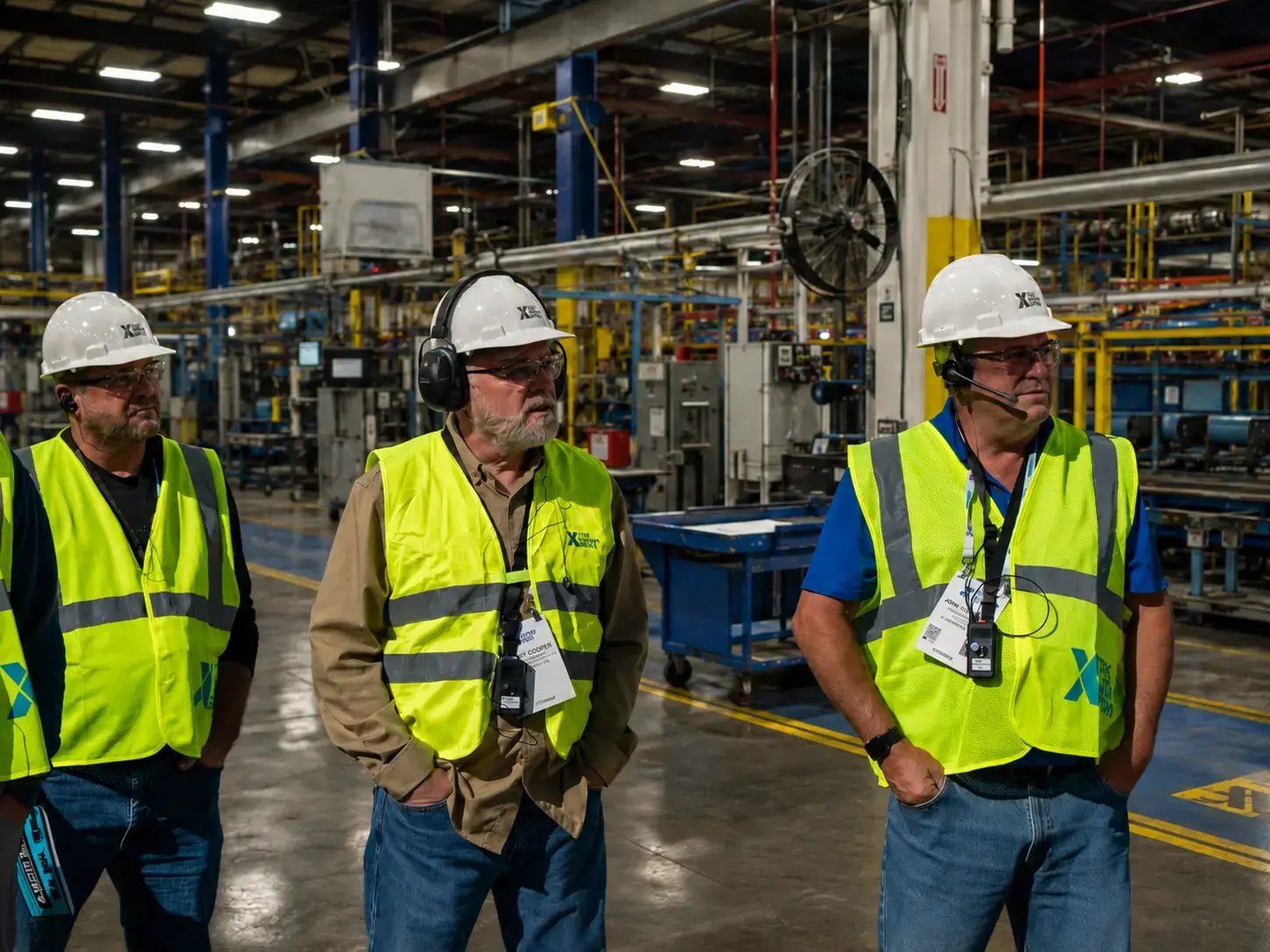
With a wireless tour guide system, the guide can speak at a normal volume while visitors listen through individual receivers or headsets. The group can continue moving while the guide explains what they are seeing, and visitors do not have to stay within a few feet of the speaker to follow the conversation.
The technology removes communication barriers that can get in the way of the experience you are trying to create.
View Manufacturing Tour Guide System Options
Enabling Interaction: Questions May Be as Valuable as the Tour
For customer and prospect tours, communication does not always need to flow in one direction.
Imagine a prospective customer sees a process that relates directly to a challenge in their own operation. They have a question right then.
But if the tour is designed primarily as a one-way presentation, the customer may wait until the group stops or try to get the salesperson's attention later. Or, they may simply forget the question altogether as the tour moves on.
A two-way plant tour guide system gives visitors the ability to ask questions while the experience is happening in real time.
That can make the tour more useful for the visitor, but it also makes the conversation more valuable for the sales team.
The questions customers ask can reveal:
- What caught their attention?
- What concerns do they have?
- Which capabilities matter most to them?
- Where do they see potential applications within their own business?
A tour can become less about presenting information and more about discovering what matters to the person standing in front of you.
CASE STUDY: Marvin Chooses ListenTalk for Manufacturing Facility Group Tours
One-Way or Two-Way Headsets? It Depends on the Purpose of the Tour
Not every customer tour needs two-way communication. Here's a simple way to evaluate each.
One-way Headset Applications
If the primary goal is to deliver a consistent or scripted presentation to a larger group, a one-way wireless tour guide system may be exactly what you need. The guide speaks, visitors listen and everyone can hear clearly as the group moves through the facility.
Two-way Headset Applications
If conversation and interaction are important parts of the experience, a two-way system may make more sense. Visitors can ask questions without shouting across a production floor or waiting until the end of the tour.
The right choice depends on the environment, group size and what you want visitors to be able to do during the experience.
That is also why we do not believe there is one tour guide system that is right for every facility or every application. The technology should support the experience you are trying to create.
RELATED: One-way vs. Two-way Headsets: What's the Difference?
Professional Tours Build Confidence
There is another part of the sales process that is harder to measure but still important: confidence.
When a prospective customer visits your facility, they observe more than the equipment you want to show them. They experience your organization.
- Is the visit organized and prepared?
- Can they follow what is happening?
- Are they able to interact with the people leading the tour?
- Does the experience feel intentional?
- Can they see or learn something they couldn't from a sales sheet, phone call or PowerPoint presentation?
A headset system alone does not create a great customer experience. But poor communication can absolutely get in the way of one.
When visitors hear clearly, stay connected to the group and ask questions when they have them, the technology disappears into the background. The focus stays where it belongs: on your people, your capabilities and the conversation with your customer.
Headsets Do Not Close the Sale. They Support the Experience That Might.
It would be easy for us, as a headset provider, to tell you that better tour technology leads to more sales.
A wireless tour guide system cannot close a deal. Instead, it removes communication barriers from an experience that may help a customer make a buying decision.
For companies that regularly bring prospects, customers, partners or other important visitors through their facilities, the question is not simply whether people can get through the tour.
It is whether they can hear it, understand it, interact with it and leave with a better understanding of why they should do business with you.
Which leads to why you should consider doing business with us.
At Implecho, we've been equipping manufacturing teams with quality, reliable headsets for decades, and we can guide you to the right fit for any environment. Contact our team of experts today for a consultation and to request a free demo.
Key Takeaways
- A facility tour can support the sales process. It gives prospective customers an opportunity to experience capabilities that are difficult to communicate through presentations alone.
- Clear communication is important. Wireless tour guide systems allow visitors to hear the guide while moving through noisy or active environments.
- Customer questions can create valuable sales conversations. Two-way systems allow visitors to ask questions when something catches their attention.
- One-way and two-way systems serve different purposes. The best choice depends on whether your tour is primarily a presentation or an interactive conversation.
- The headset is not the experience. Its job is to remove communication barriers so visitors can focus on your facility, your people and your capabilities.
Frequently Asked Questions
Do facility tours help support the sales process?
They can. Facility tours allow prospective customers to see a company's capabilities, processes, equipment and people firsthand. They can also create opportunities for customers to ask more specific questions based on what they see during the visit.
Should you use headsets for customer facility tours?
Wireless tour guide headsets can be particularly useful in manufacturing plants, warehouses and other environments where background noise, group movement or distance from the guide makes normal conversation difficult.
Are two-way headsets better for customer tours?
It depends on the purpose of the tour. One-way systems work well when the guide primarily needs to deliver information to the group. Two-way tour guide systems can be valuable when questions, discussion and interaction are an important part of the customer experience.
How do you choose a tour guide system for a manufacturing facility?
Consider the facility's noise level, group size, tour length, communication range, whether visitors need to ask questions and whether hearing protection is required. The best tour guide system is the one that supports the way your facility actually conducts tours.